Updated: August 2026
A yard visit is worth a day of your time and should follow a list, because the things that predict a good build are ordinary and easy to walk past. This checklist covers storage, work in progress, records, people and safety, and it works whether you are technical or not.
- Walk the whole site, not just the vessel the yard wants to show you.
- Look at habits — storage, tidiness, tool care — because habits predict what happens when you are not there.
- Ask the same question twice, at different times, to different people.
Storage and materials (points one to five)
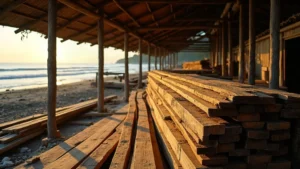
One: is structural timber stored off the ground, stickered for airflow and protected from rain and direct sun? Two: is it segregated by species and use, or piled together? Three: is there evidence of moisture measurement, or is seasoning simply assumed? Four: are fastenings and fittings stored in closed containers rather than open trays in a humid shed? Five: are adhesives, sealants and coatings within date and stored out of heat?
These five take fifteen minutes and are the strongest early signal available. A yard that manages materials carefully will manage your hull carefully.
Work in progress (six to ten)
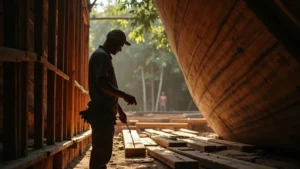
Six: how many hulls are on site, at what stages, and can the yard explain each one? Seven: are any clearly stalled, and if so why? Eight: sight along a planked hull at a low angle — are seams even and fair, or does the work change character partway? Nine: are dowel or fastening patterns consistent? Ten: is the current drawing set physically present at the work, at the correct revision?
Point ten is the one most often failed. Drawings sitting in an office while the crew builds from memory is common, and it is the root of many later disputes about what was specified.
Records and process (eleven to fourteen)
Eleven: does the yard keep written inspection notes, and will it show you recent ones? Twelve: can it produce material receipts for the timber in a current build? Thirteen: how was the snag list from the last delivery recorded and closed? Fourteen: has an independent surveyor attended recent builds, and may you speak to one?
The absence of records is not disqualifying in traditional building, but it defines your own supervision burden. If the yard keeps no trail, you must create one, and you should budget for that before signing rather than discovering it later.
People (fifteen to seventeen)
Fifteen: who is the master builder, how many hulls are they overseeing, and will they be here for your programme? Sixteen: are younger workers being trained alongside experienced ones, or is there a visible skills gap? Seventeen: which trades are in-house and which are subcontracted, and to whom?
Ask point seventeen carefully. Almost every yard subcontracts something — electrical, refrigeration, upholstery, sometimes machinery installation. Openness about it is a good sign. Implying full in-house capability that does not exist is not.
Safety and site conduct (eighteen to twenty)
Eighteen: is there any fire precaution beyond a single extinguisher, given that this is a site full of timber, dust, solvents and hot work? Nineteen: are power leads run clear of water and walkways, and is equipment in reasonable condition? Twenty: at the end of the working day, is the site cleared and swept, or left as it fell?
Point twenty is the single best proxy for everything else. Yards that tidy at day’s end tend to be yards that finish work properly, keep records, and hand over vessels without a three-month snagging tail.
How to use the answers
No yard will score twenty out of twenty. The purpose is not to disqualify but to calibrate: to know before you sign where the gaps are, and therefore what your own supervision must cover. A yard with superb craft and no records is a perfectly workable partner for an owner who brings a representative. The same yard is a poor partner for an absent owner who assumes documentation will appear.
Visit twice if you can, several weeks apart, and if possible arrive once without a scheduled appointment. The difference between the two visits is often the most useful information you will gather.
Frequently asked questions
How long should a yard visit take?
Plan most of a working day. You need time to walk every hull, look at storage and workshops, review records and talk to the people doing the work. An hour-long tour shows you what the yard wants to show you.
Should I bring a surveyor to the first visit?
For a significant build, yes. A surveyor familiar with the vessel type will read scantlings, joints and fastening quality far faster than an owner and will ask the technical questions that shape the contract.
Is it rude to arrive unannounced?
It is reasonable to arrive without a detailed schedule as long as you respect site safety and do not expect senior attention on demand. A yard confident in its ordinary Tuesday will not mind. One that does mind has told you something.
Related reading
Working with our build desk
If you would like our site checklist in a printable form before your visit, ask the build desk. You can reach the build desk on WhatsApp at +62 811-3941-4563 or by email at [email protected]. Construction and supervision contracts are issued by PT Komodo Galangan Nusantara; Phinisi Shipyard is a specialist maritime brand under Juara Holding Group.