Updated: August 2026
- Verify the builder’s ancestral lineage and adherence to traditional, non-blueprint construction methods.
- Scrutinize their portfolio, focusing on luxury-class vessels and speaking directly with previous international clients.
- Confirm their access to legally sourced and properly seasoned Ulin (ironwood) and Jati (teak).
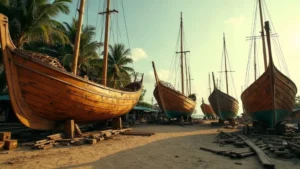
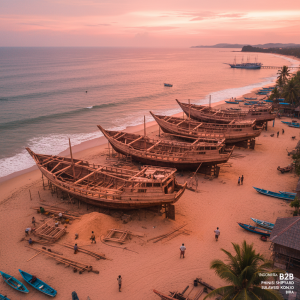
The air in Tanah Beru hangs thick and sweet with the scent of sawdust, salt, and clove cigarettes. Standing on the white-sand shore, you hear it before you see it: the rhythmic, percussive knock of an adze shaping a hull plank, a sound that has echoed across this coastline for centuries. Before you, skeletal wooden giants rise from the beach, the future queens of the Indonesian archipelago. This is where the dream of a phinisi takes physical form. But commissioning one is a journey into the heart of a culture, a complex dance of trust, tradition, and technical precision. Embarking on the path of finding a phinisi builder in Indonesia is not merely a commercial transaction; it is an entry into a sacred, living heritage. And it begins by asking the right questions.
Beyond the Blueprint: Understanding the Phinisi’s UNESCO-Protected Lineage
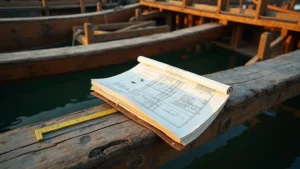
Before a single piece of timber is selected, one must grasp the soul of the vessel. In 2017, UNESCO inscribed the “Art of boatbuilding in South Sulawesi” onto its list of the Intangible Cultural Heritage of Humanity. This isn’t just a nod to a beautiful boat; it’s a recognition of the Konjo people’s ancestral knowledge, a building process passed down through generations without written blueprints. I once shared coffee with a master builder, a punggawa, near Bira. He explained, “The boat is already in my head. My father saw it in his, and his father before him. The measurements are in my hands, my arms.” This is the core distinction. A true phinisi is built by eye, by instinct, a philosophy that a premier phinisi shipyard holds as its guiding principle. Your first question shouldn’t be about price, but about lineage. Ask the builder to trace his masters. Who did he apprentice under? How many keels has he personally laid? This oral history is his resume. Be wary of yards that rely solely on naval architects’ drawings; while essential for modern systems, they should complement, not replace, the builder’s innate expertise. The Konjo craft, traceable to seafaring traditions of the 14th century, is a living art form, and you are commissioning a piece of that history.
Question 1: What is Your Timber Sourcing and Seasoning Process?
The longevity and integrity of a phinisi are written in its wood. The conversation must turn to the very foundation of the build: the timber. The primary woods used are Ulin (Eusideroxylon zwageri), or ironwood, for the keel and hull, and Jati (teak) for the decks and superstructure. Ironwood is a marvel of nature; with a density often exceeding 1.1 g/cm³, it is so dense it sinks in water, offering unparalleled resistance to marine borers and rot. A 35-meter luxury phinisi can require up to 250 cubic meters of this precious resource. Therefore, your most critical inquiry is about sourcing. Ask for documentation. Since the early 2000s, the Indonesian government has implemented the SVLK (Timber Legality Verification System) to combat illegal logging. A reputable builder will proudly provide certificates of origin for their timber. Beyond legality is the crucial process of seasoning. Freshly cut wood is unstable. It must be air-dried for years—a minimum of two for hull planks, ideally longer for structural beams—to reduce its moisture content to below 15%. A builder who rushes this stage is building failure into the hull; the wood will warp, check, and crack as it dries in place. Ask to see their timber yard. Look at the stacks. Are they properly ventilated? Can they show you wood that has been sitting for several seasons? This patience is the hallmark of a master craftsman, a key factor when finding a phinisi builder in Indonesia for a vessel meant to last generations.
Question 2: Can I See Your Portfolio and Speak with Past Clients?
A builder’s past is the most accurate predictor of your future. While the traditional boatyards of South Sulawesi construct many types of vessels, from local fishing boats to cargo haulers, building for the international luxury charter market is an entirely different discipline. The fit, finish, and engineering required for a vessel that will command charter rates of $10,000 per night are exponentially more demanding. You must insist on seeing their portfolio of completed luxury-class phinisis. Go beyond photographs. Ask to visit the boats in person, whether at port in Labuan Bajo or anchored off Raja Ampat. A contact of mine in the Komodo charter scene, who manages a fleet of four multi-million-dollar yachts, advises, “Don’t just look at the shiny surfaces. Run your hand along the hull. Is it fair and smooth? Inspect the joinery in the cabins. Is it tight and precise? That’s where you see the real quality.” Furthermore, ask for a list of past clients—specifically, the foreign owners who commissioned the builds. A confident builder will have nothing to hide. Speaking with two or three of these owners provides invaluable, unvarnished insight into the process: communication, adherence to timelines, budget management, and post-launch support. This level of due diligence is standard practice for any significant investment, and with the Indonesian luxury phinisi market having grown by an estimated 15% year-on-year pre-2020, it is more critical than ever.
Question 3: How Do You Integrate Modern Systems into a Traditional Hull?
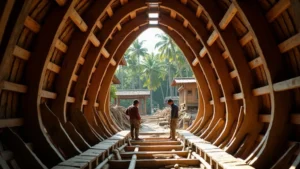
A luxury phinisi is a paradox: a vessel born of ancient tradition, yet equipped with the most sophisticated modern technology. The successful fusion of these two worlds is what separates a good build from a great one. This is a technical conversation, but a vital one. The challenge lies in installing complex systems—twin marine diesel engines, generators, watermakers, air conditioning, navigation electronics, and extensive plumbing and electrical networks—into a hand-built wooden hull without compromising its structural integrity. Ask the builder about his team. Does he have in-house specialists, or does he collaborate with experienced marine engineers and naval architects from the project’s inception? A builder who treats modern systems as an afterthought is a major red flag. Discuss specific brands and standards. A well-built yacht will use globally recognized marine-grade components, such as Victron for power management or Sea Recovery for watermakers, ensuring reliability and serviceability in remote locations. For perspective, a 40-meter phinisi might have a battery bank of over 2,500 amp-hours to power its hotel loads silently through the night. The routing of wiring and plumbing must be meticulously planned to be accessible for maintenance and isolated from bilge water. This synergy of old and new is the defining feature of a modern masterpiece, a core competency of any world-class phinisi shipyard.
Question 4: What is the Build Timeline, Payment Structure, and Contractual Framework?
This is the pragmatic heart of the project, where vision meets commercial reality. Handshake deals based on mutual respect are part of the Konjo tradition, but for an international project valued between $1.5 million and $5 million, a robust contractual framework is essential. The first point of discussion is the timeline. A builder who promises a 35-meter luxury phinisi in 12 months is likely cutting corners. A realistic timeline, accounting for timber seasoning, meticulous construction, and systems installation, is 18 to 24 months, and sometimes longer. Next, clarify the payment structure. The industry standard is a milestone-based schedule. This typically involves an initial deposit of 25-30% to secure the builder and procure timber, followed by 5-7 subsequent payments tied to tangible progress: keel laying, hull completion, deck installation, engine installation, launch, and final sea trials. This structure protects both parties. Most importantly, insist on a comprehensive, legally binding contract drafted in both English and Bahasa Indonesia. This document should be reviewed by an independent maritime lawyer based in Indonesia. I’ve heard too many cautionary tales from owners in Bali and Flores whose projects stalled for months due to vague terms or financial misunderstandings. A clear contract isn’t a sign of mistrust; it’s the foundation of a professional and successful partnership when you are finding a phinisi builder in Indonesia.
Quick FAQ on Finding a Phinisi Builder
Where are the best phinisi builders located?
The undisputed heartland of phinisi construction is the Bulukumba Regency in South Sulawesi, about 150 kilometers southeast of Makassar. The neighboring villages of Tanah Beru, Bira, and Ara are home to the most concentrated pool of Konjo master builders, a tradition celebrated by Indonesia’s own tourism board as a key cultural attraction. This is where the world’s finest phinisi yachts begin their lives.
What is the difference between a phinisi and other schooners?
A defining feature of a traditional phinisi is its gaff-ketch rig, which carries seven sails in total. The two large mainsails are unique in that they often lack a boom and are reefed by being pulled towards the mast, a design known as a “standing gaff.” While many modern luxury phinisis are technically motor-sailors that rely on engine power, this seven-sail configuration, as detailed on platforms like Wikipedia, is their ancestral signature.
Is an on-site project manager truly necessary?
For any international client, an independent, on-site project manager is non-negotiable. This individual is your eyes and ears on the ground, providing weekly progress reports with detailed photographs, overseeing quality control, and bridging the inevitable cultural and linguistic gaps. Their presence ensures the build adheres to the agreed-upon specifications and can prevent costly misunderstandings, often saving far more than their fee, which typically amounts to 10-15% of the build cost.
The journey of commissioning a phinisi is as profound as sailing one through the emerald islands of Raja Ampat. It is an investment not just in a vessel, but in a legacy. Asking these critical questions is the first and most important step, transforming you from a mere buyer into an informed patron of a living art form. This diligence ensures your vision is realized by artisans who honor their heritage while embracing the standards of modern luxury. The process of finding a phinisi builder in Indonesia culminates in a partnership, and the right partner makes all the difference. The master craftsmen at Phinisi Shipyard embody this ideal, merging centuries of Konjo wisdom with the exacting precision of contemporary naval engineering. To begin charting the course for your own bespoke vessel, start a conversation with their expert team.