Updated: August 2026
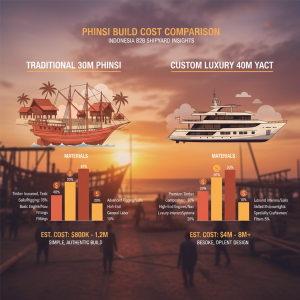
- Base Hull & Superstructure: Accounts for 30-40% of the total cost, heavily dependent on the choice of ironwood and teak.
- Technical Systems: Marine engines, generators, and navigation equipment can easily represent 25% of the budget.
- Interior Fit-Out: The largest variable, where bespoke joinery, imported materials, and high-end systems can comprise over 40% of the final price.
The air in Tana Beru, South Sulawesi, is thick with the scent of raw ironwood and the faint, salty tang of the Flores Sea. A rhythmic chorus of mallets striking chisels provides the soundtrack, a sound that has echoed through these boatyards for centuries. Here, under the relentless Indonesian sun, master craftsmen are meticulously shaping the hull of a 45-meter vessel. This is not just a boat; it’s a floating palace, a modern phinisi, and the genesis of a dream. For years, I’ve covered the world’s most exclusive travel experiences, but nothing quite prepares you for the visceral reality of witnessing one of these magnificent ships being born. The question I hear most often from would-be owners and investors is a simple one, yet its answer is deeply complex: What is the real luxury phinisi construction cost today?
The Heritage Keel: Understanding the Foundational Costs
Before a single dollar is spent on Italian marble or German appliances, the investment begins with the very soul of the ship: the wood. The art of phinisi boat-building, recognized by UNESCO as an Intangible Cultural Heritage of Humanity, is rooted in the meticulous selection and shaping of timber. The keel is traditionally laid in a ceremony, a single, massive beam of Ulin, or Bornean ironwood. This timber, with a density that allows it to sink in water, is legendary for its resistance to marine borers and rot. In 2024, sourcing high-grade, legally certified Ulin costs between $2,500 and $4,000 per cubic meter. A 40-meter phinisi requires approximately 350-400 cubic meters of wood for its hull and structure, putting the raw timber cost for the frame alone in the range of $875,000 to $1.6 million. The hull construction, a process taking up to 12 months, involves a team of 20 to 30 highly skilled Konjo builders. Their labor, passed down through generations, represents a significant portion of this initial phase. “You are not just paying for wood,” explains Hasanuddin, a master builder at the phinisi shipyard with over 40 years of experience. “You are investing in centuries of knowledge. We don’t use blueprints; the design is in our heads, the balance is in our hands.” This artisanal approach, while priceless in heritage, translates to roughly 120,000 man-hours for the structural build, a cost factor that separates a true phinisi from a standard yacht.
Power and Precision: The Engineering Heart of a Modern Phinisi
While the soul of a phinisi is its timber hull, its heart is a modern, powerful engine room. The romantic image of sailing silently through the Komodo archipelago is only half the story. The reality of the luxury charter market demands reliability, speed, and the power to run a five-star hotel at sea. This is where a significant portion of the budget is allocated. A modern 45-meter phinisi is a motorsailer, equipped with twin marine diesel engines. Brands like Yanmar, Caterpillar, or Mitsubishi are common choices, with a pair of reliable 500-horsepower engines costing between $150,000 and $300,000, excluding installation. But the main engines are just the start. To power the amenities expected by discerning guests—air conditioning in 8 cabins, professional-grade galley equipment, extensive lighting, and advanced water makers capable of producing 10,000 liters per day—requires at least two, and often three, powerful generators. These systems can add another $100,000 to $200,000. The entire technical package, including propulsion systems, steering, fuel tanks holding 20,000 liters, and exhaust, must be meticulously planned and installed. This phase requires a different skill set from the traditional builders, involving marine engineers and electricians to ensure the vessel meets international safety and classification standards, such as RINA or Bureau Veritas, a process that itself can add over $50,000 in fees and compliance costs.
The Interior Variable: Crafting a Bespoke Onboard Experience
This is where the budget can truly spiral, and where an owner’s vision transforms a sturdy vessel into a world-class luxury retreat. The interior fit-out is the single largest variable in determining the final luxury phinisi construction cost. A baseline, high-quality finish for a 40-meter phinisi with 6-7 cabins might start around $800,000. However, for a vessel targeting the top 1% of the charter market, this figure can easily exceed $2 million. The difference lies in the details. Are the walls clad in locally sourced teak or imported Italian leather? Are the bathroom countertops made of engineered stone or single slabs of Calacatta marble? A leading Jakarta-based interior designer I spoke with, who specializes in marine projects, broke it down: “A custom-built, climate-controlled wine cellar for 100 bottles adds $40,000. A state-of-the-art entertainment system with satellite TV and individual cabin controls can be $150,000. The galley alone, if outfitted with professional equipment from brands like Rational and Sub-Zero, can cost over $100,000.” Sourcing these materials and systems for remote shipyards in Sulawesi adds another 10-15% in logistics costs. The craftsmanship must be impeccable, with custom joinery to account for the unique curves of the hull. This phase can take 8 to 10 months and involves a small army of carpenters, plumbers, electricians, and finishing specialists working in concert. The choices made here directly impact the vessel’s charter appeal and its potential nightly rate, which for top-tier phinisis now exceeds $10,000 per night, according to the official Indonesia Travel portal.
Unseen Essentials: Navigation, Safety, and Global Connectivity
Beyond the polished wood and plush upholstery lies a complex network of systems that ensure the safety and comfort of everyone on board. These are the non-negotiable, high-cost items that are often overlooked in initial budget discussions. A comprehensive navigation and communication suite is paramount. This includes dual radar systems, advanced GPS chart-plotters, echo sounders, and autopilot systems from brands like Furuno or Simrad, easily costing $150,000. In an era of constant connectivity, high-speed internet is no longer a luxury but an expectation. A modern satellite communication system, such as a Starlink Maritime package, adds an initial hardware cost of around $5,000 and a monthly service fee of $5,000, but provides the connectivity demanded by charter guests. Safety equipment is another area where no expense is spared. A vessel built for commercial charter in Indonesian waters must adhere to strict regulations. This means SOLAS-grade life rafts, a tender boat for emergencies, a comprehensive fire suppression system for the engine room and galley, and extensive medical kits. The total investment in safety and navigation equipment for a 50-meter luxury phinisi can easily reach $300,000. These systems don’t add to the aesthetic, but they are fundamental to the vessel’s operational license, insurance viability, and, most importantly, its reputation as a safe and reliable charter platform.
The Long Tail: Post-Launch and Operational Costs
The final payment to the shipyard does not mark the end of the investment. A prudent owner must budget for the significant costs that begin the moment the phinisi is launched. The “long tail” of ownership is a critical factor in the overall financial equation. First-year “snagging” and systems calibration can cost between $50,000 and $100,000 as the vessel settles. Annual maintenance is the largest ongoing expense. A common rule of thumb in the yachting industry is to budget 5-10% of the initial build cost for annual upkeep. For a $3 million phinisi, this translates to $150,000 to $300,000 per year. This figure covers annual dry-docking for hull inspection and anti-fouling treatment, engine and generator servicing, sail and rigging maintenance, and the continuous varnishing and oiling required to protect the woodwork from the tropical sun and salt. Crewing is another major operational cost. A 45-meter phinisi requires a professional crew of 12 to 18 members, including a captain, cruise director, engineers, chefs, and stewards. Annual crew salaries can easily exceed $250,000. Factoring in insurance, mooring fees, and fuel, the all-in operational cost to run a luxury phinisi for a year can be upwards of $500,000, a figure that must be offset by a successful charter program of at least 15-20 weeks per year.
Quick FAQ on Phinisi Construction Costs
How long is the build process for a luxury phinisi?
From the keel-laying ceremony to the final sea trials, a bespoke luxury phinisi between 40 and 50 meters typically takes 18 to 24 months to complete. The initial hull construction takes about 12 months, with the remaining time dedicated to technical installation, interior fit-out, and finishing.
Where is the best place to build a traditional phinisi?
The heartland of phinisi construction remains in South Sulawesi, specifically in the villages of Tana Beru, Ara, and Bira. This region is home to the Konjo people, the master boat-builders whose skills are recognized by UNESCO. Reputable builders like Phinisi Shipyard combine this traditional craftsmanship with modern project management and engineering oversight. The Pinisi tradition is deeply embedded in the culture of this specific region.
Does a wooden hull affect insurance and resale value?
Yes, significantly. Insuring a wooden vessel, especially a new build, requires detailed surveys and a proven maintenance schedule. Premiums can be 15-25% higher than for a comparable steel or fiberglass yacht. However, a well-maintained, high-quality phinisi from a respected yard holds its value remarkably well, as it is considered a unique, heritage asset. The market for these vessels is a niche but passionate one.
Building a luxury phinisi is far more than a simple financial transaction; it is an investment in a legacy. It’s a project that combines ancient maritime artistry with cutting-edge marine technology. The final cost reflects a journey of collaboration between the owner, designers, and the master builders who pour their ancestral knowledge into every joint and plank. The result is not merely a yacht, but a piece of living history, a platform for unparalleled adventure in one of the world’s most beautiful archipelagos. To truly understand the nuance and potential of such a project, a direct conversation with the experts is essential. The team at the phinisi shipyard possesses the deep, hands-on experience required to navigate every stage of this remarkable process, from initial concept to triumphant launch.