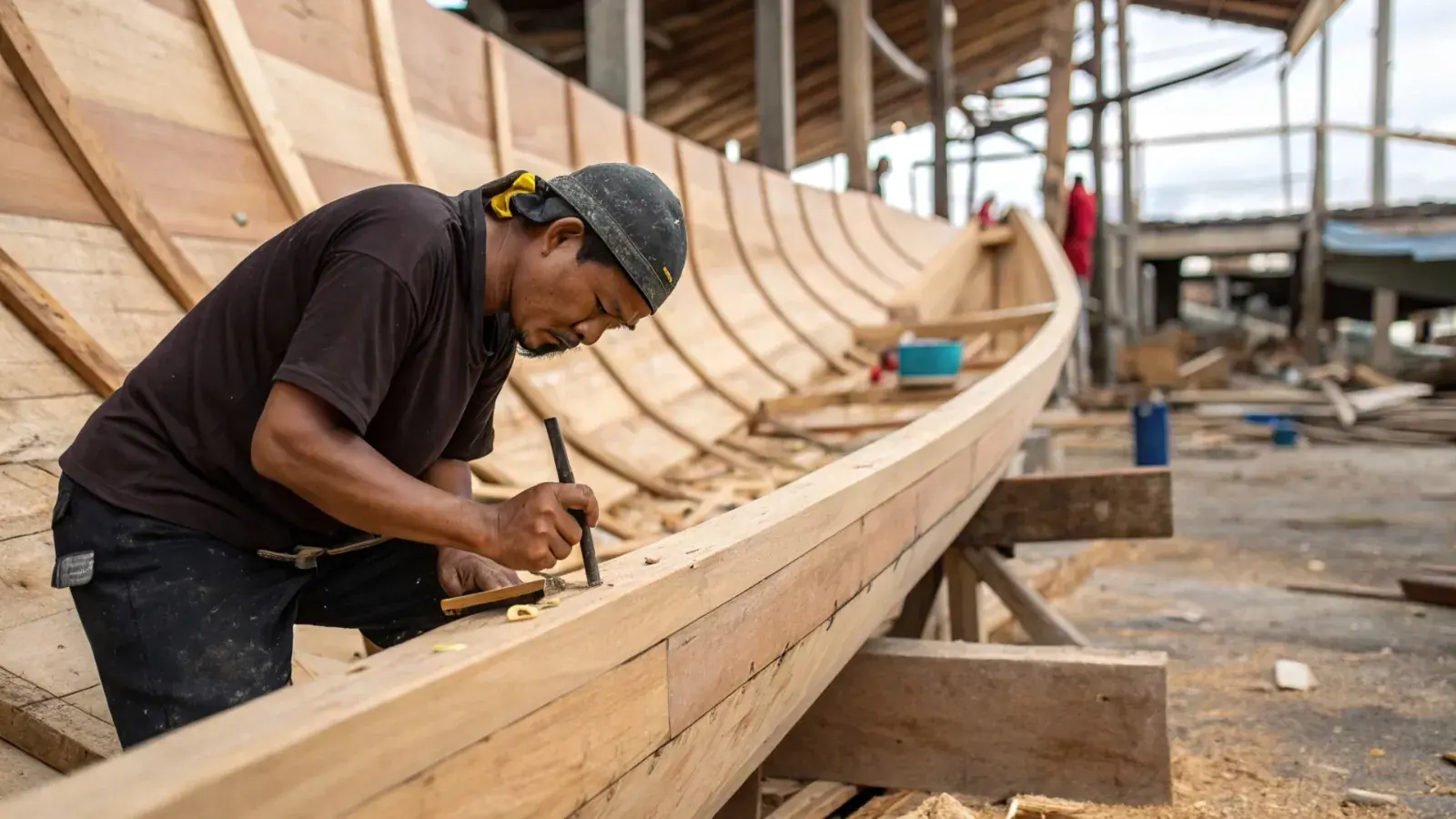
 Stage 1
Laying keel and stem
An ironwood keel is laid on the sand; stem and stern posts are joined with wooden dowels, no metal nails.
Kayu ulin keel
Lunas
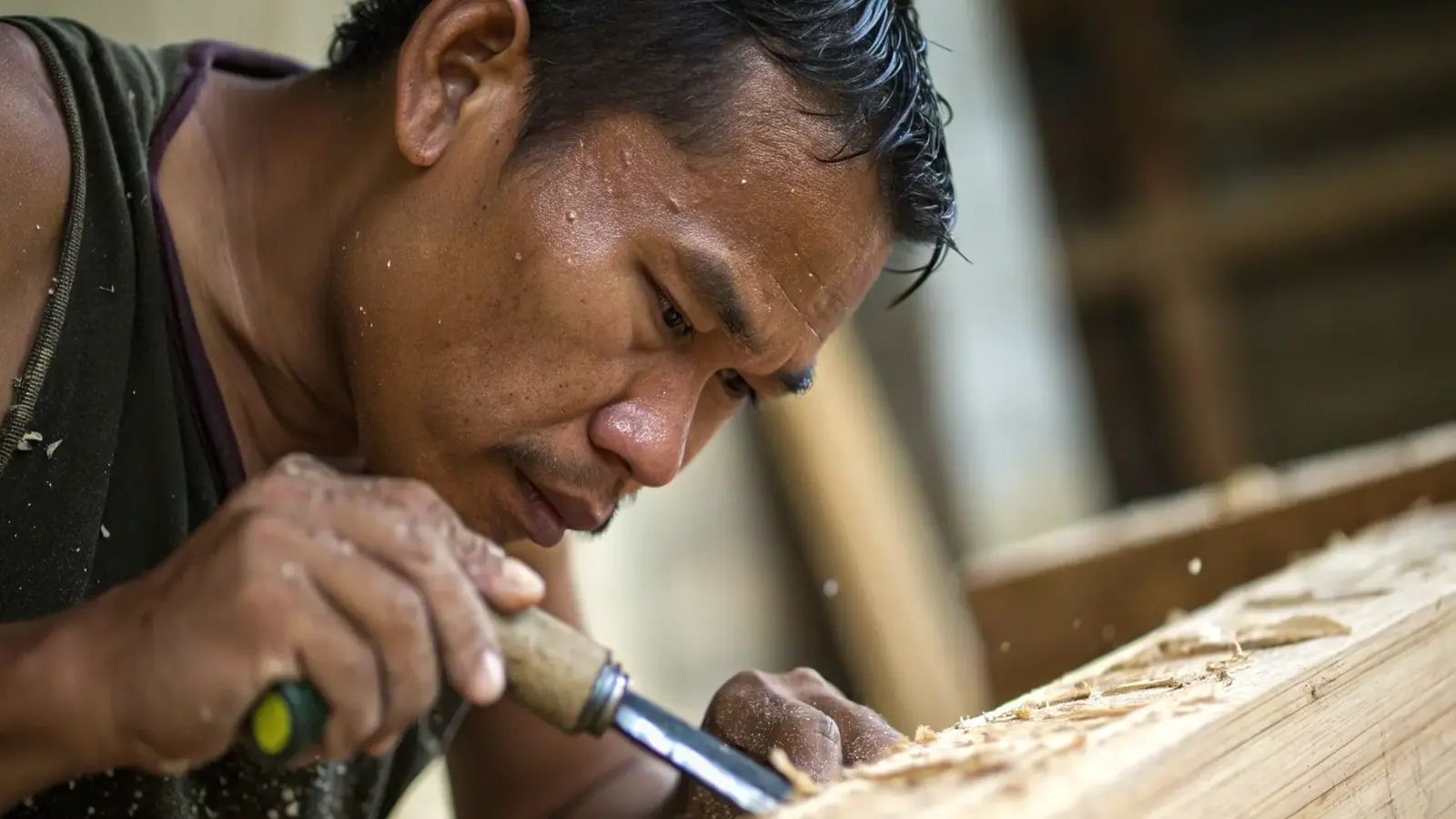
On Bira’s coast, where the adze has sounded since at least the 14th century, we sat with a respected Panrita Lopi to learn how a phinisi is born.
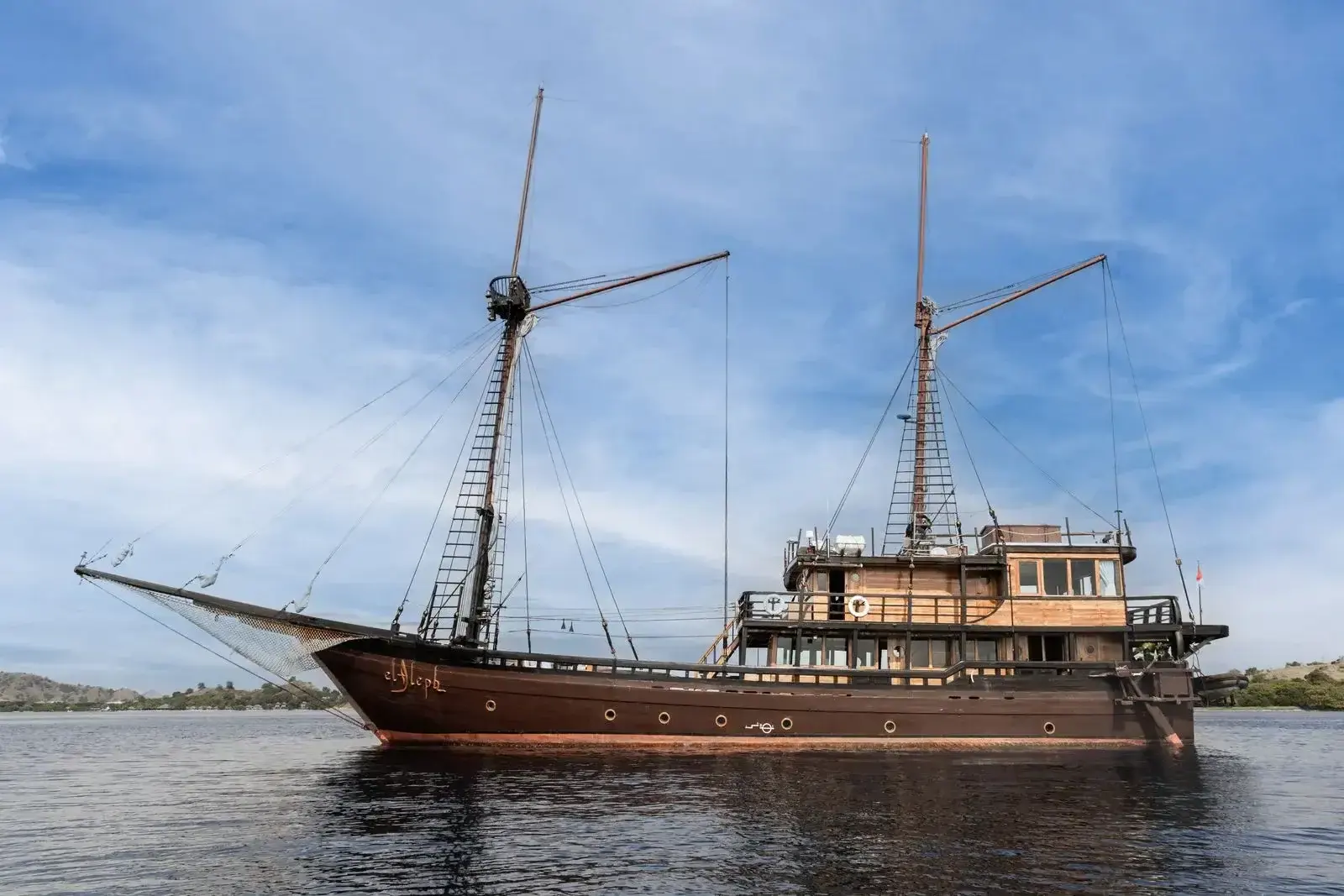
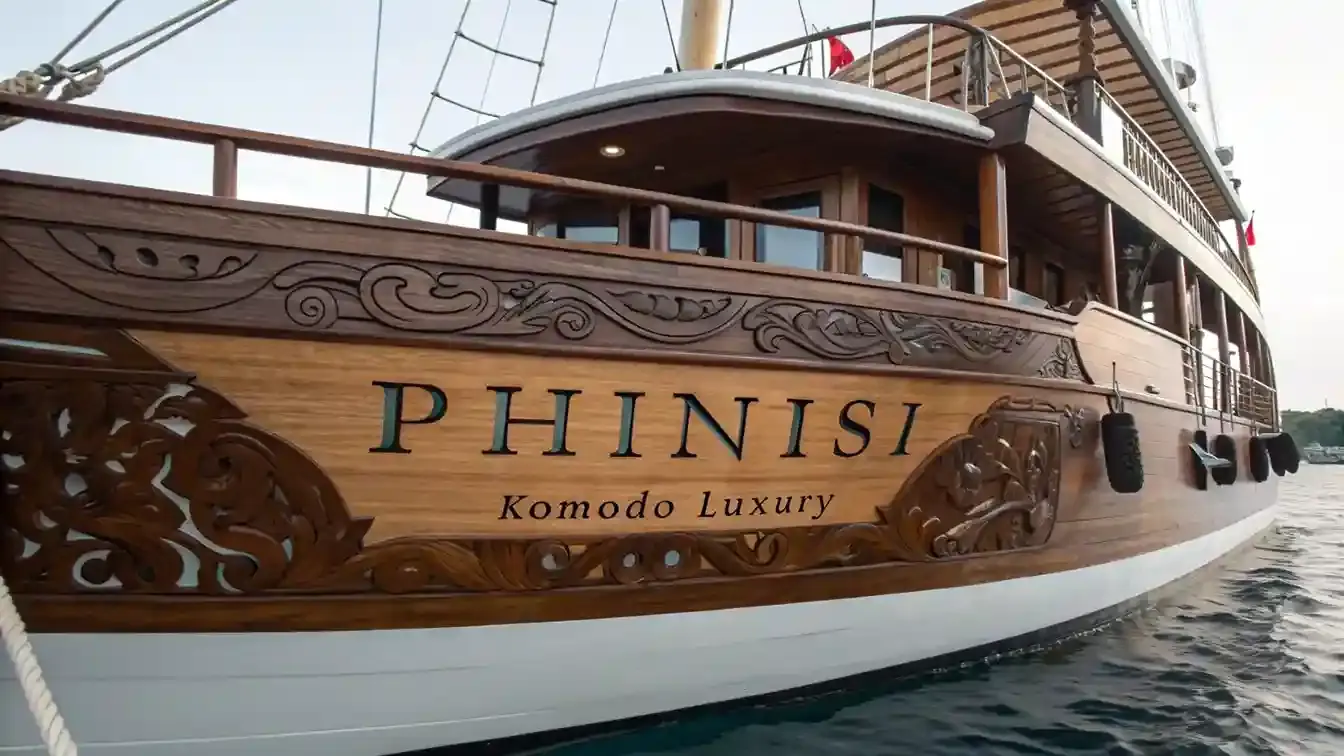
In South Sulawesi, shipbuilding flows through the bloodline. The Konjo of Tana Beru, Bira and Ara run over two dozen active shipyards, and a Panrita Lopi is keeper of ancestral knowledge, naval architect and spiritual leader.
We do not replace this tradition; we give it a platform, integrating modern safety standards to meet Biro Klasifikasi Indonesia (BKI) class requirements.
“We do not build boats. We give birth to them. The wood has a spirit. You must listen to it. The plan is not on paper; it is in the heart.”
It begins with the bilang lopi — the reckoning of the boat — then moves to the beach with adze and hand drill.
Stage 1An ironwood keel is laid on the sand; stem and stern posts are joined with wooden dowels, no metal nails.
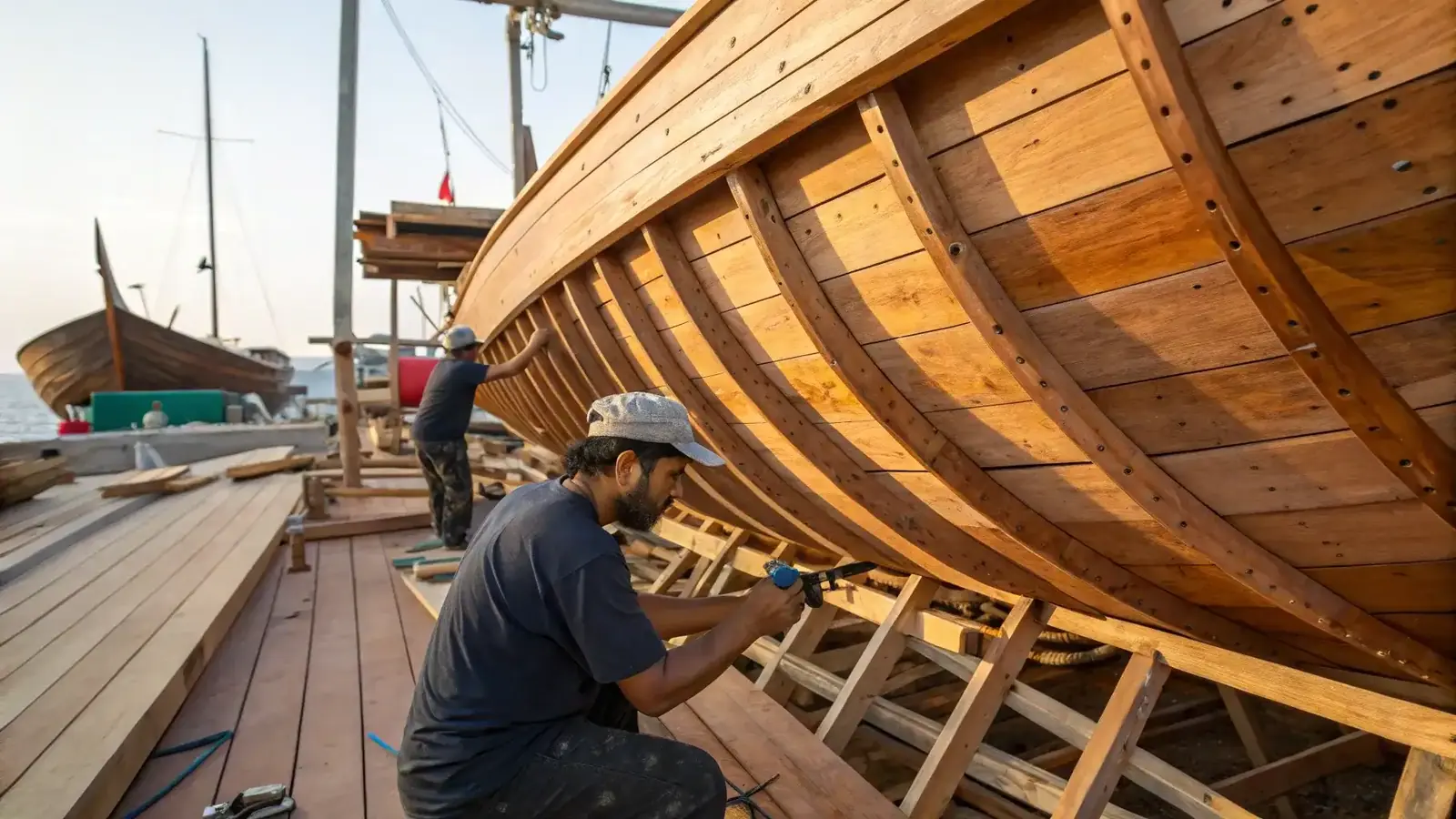 Stage 2
Each board is heated over a fire, bent by hand and fastened to its neighbour; ribs are fitted only afterwards.
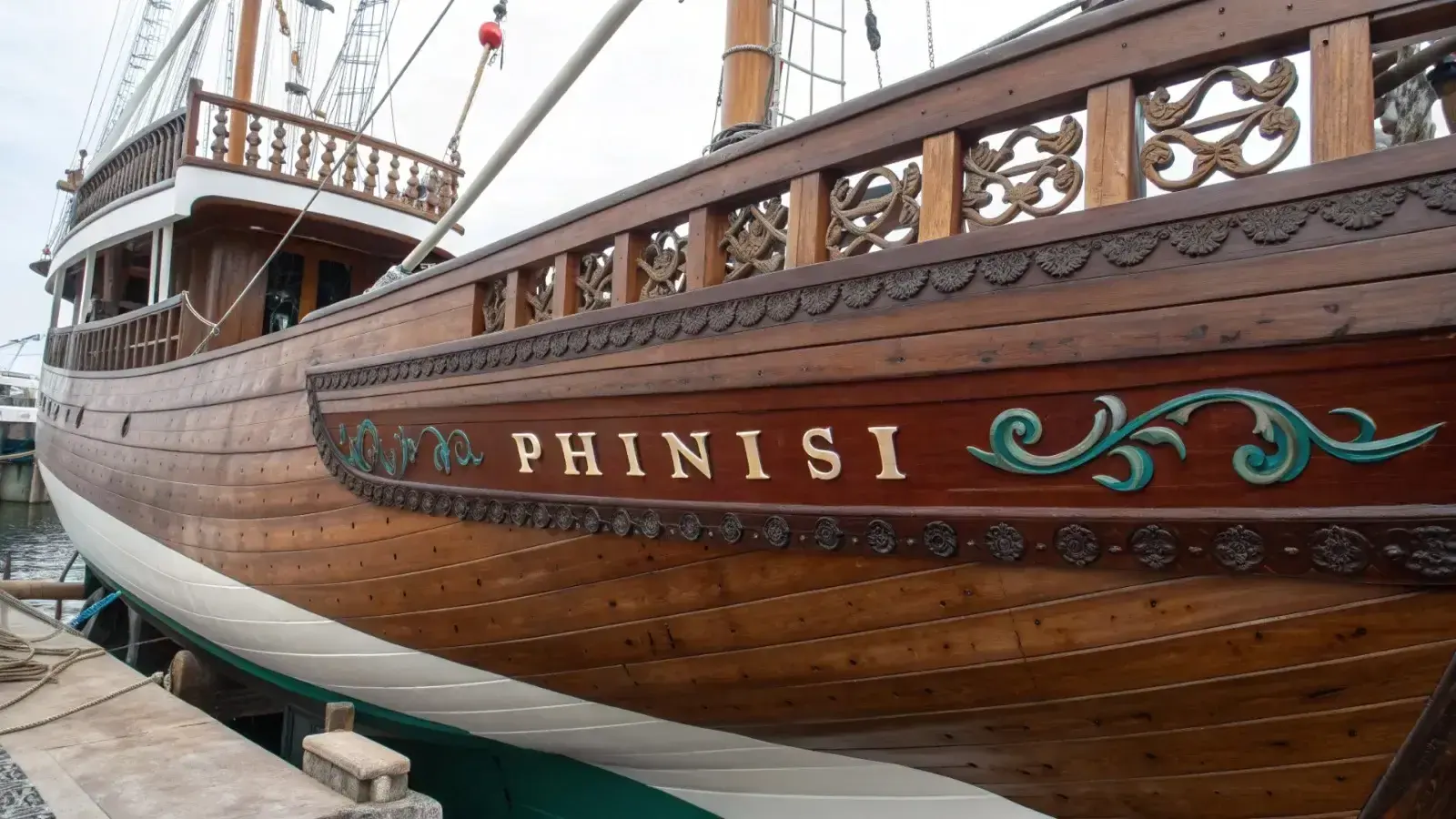 Stage 3
Engineers, electricians and interior craftsmen add navigation, marine-grade wiring, engines and bespoke interiors to the finished hull.
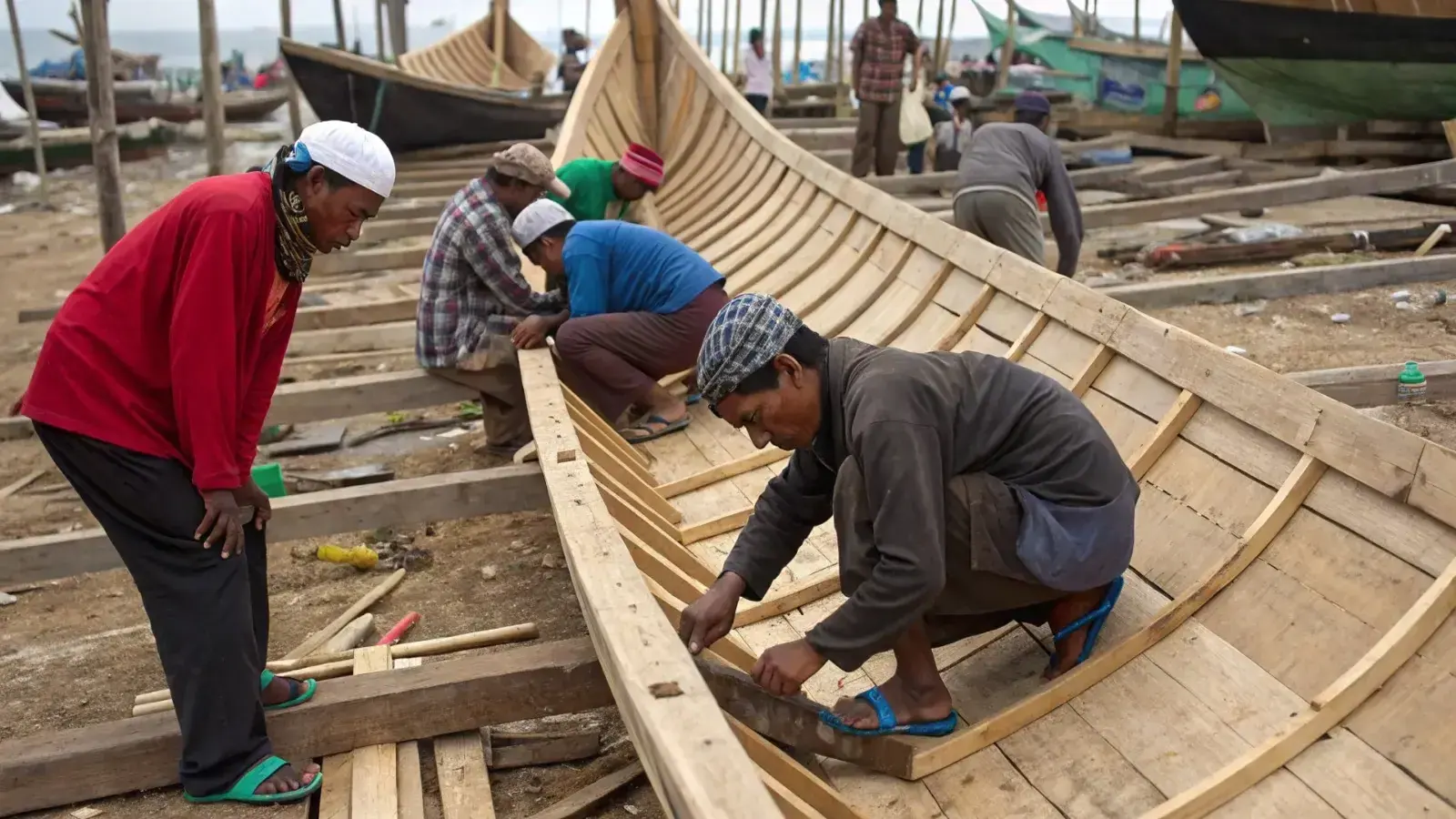
“The young must learn with their hands, not just their eyes,” says Haji Ambo. “Knowledge is not in a book.” Consistent, high-value projects let masters like him afford to take on and train younger builders.
At least five major rituals mark key stages. “We must ask permission,” Haji Ambo notes, “from the forest for the wood, and from the sea.”
The timber, tools and people behind every phinisi.
It is Konjo for ‘master shipbuilder’: panrita is a man of wisdom or expert, lopi means boat. The title marks a respected elder who holds the knowledge of design, construction and ritual.
The keel is typically dense kayu ulin (ironwood). Hull and frames often use kayu bitti (vitex cofassus) or teak, each piece assessed by the Panrita Lopi for grain, strength and spiritual suitability.
Typically 18–24 months, depending on size, interior complexity and technical requirements. Traditional hull construction can take up to a year, followed by technical installation, outfitting and finishing.
The hull is traditional, but modern engineering oversight and classification standards such as RINA or BKI apply from day one, with stability calculations and modern safety, navigation and engine systems.
It is core to Konjo tradition and avoids the need for slipways or travel lifts. At launch the finished boat is moved into the sea over wooden rollers at high tide.
Yes. Clients in the advanced stages of commissioning can visit the partner yard in South Sulawesi, by appointment, to see the Konjo builders at work and meet the Panrita Lopi.
Talk to our project team about a custom phinisi, from first consultation with the master builders to the final launch.
+62 811-3941-4563 · bd@juaraholding.com