Updated: August 2026
- They utilize centuries-old, blueprint-free techniques recognized by UNESCO.
- Vessels are constructed primarily from tropical hardwoods like ironwood and teak.
- Modern yards now integrate advanced marine engineering to build luxury charter vessels for routes in Raja Ampat and Komodo.
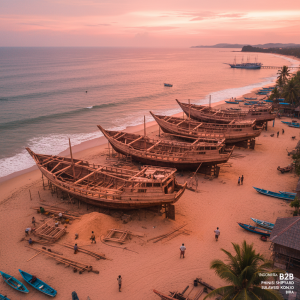
The air hangs thick and sweet with the scent of curing wood, salt, and clove cigarettes. On the white sands of Tana Beru, the rhythmic percussion of an adze striking dense ironwood provides a steady beat against the gentle wash of the Flores Sea. This is not a factory; it is a crucible of creation. Here, along a stretch of coastline in South Sulawesi, massive skeletons of wood rise from the shore, their curved ribs reaching for the tropical sun. This is the heart of Indonesia’s maritime soul, a phinisi boatyard in Sulawesi, where vessels of exceptional character are born not from blueprints, but from an unbroken chain of ancestral knowledge.
The Enduring Legacy of the Konjo Shipwrights
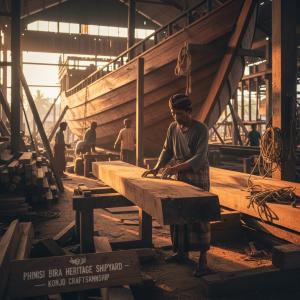
To witness the construction of a Phinisi is to step outside of modern time. The process is governed by the hands and eyes of the Konjo people, the master mariners and shipwrights of this region. For them, boatbuilding is more than a trade; it is a sacred art, a cultural cornerstone so profound that in 2017, UNESCO inscribed the “Art of boatbuilding in South Sulawesi” onto its list of the Intangible Cultural Heritage of Humanity. This is not a recent phenomenon; archaeological evidence and local lore suggest these maritime traditions stretch back to at least the 14th century, when similar vessels carried spices and emissaries across the vast Indonesian archipelago.
What is most remarkable is the transmission of this knowledge. There are no technical drawings, no CAD files, no laser-cut frames. The entire design for a 40-meter, 350-ton vessel exists solely in the mind of the punggawa, or master builder. He directs his team through a series of rituals and verbal commands, relying on intuition and generations of experience. The process begins long before the first timber is cut, with ceremonies to select the right trees in the forest and to appease the spirits of both land and sea. Each stage of the build, from laying the keel to stepping the masts, is marked by specific rituals, underscoring the deep spiritual connection between the builders, the boat, and the ocean it will call home. This synthesis of skill, spirituality, and community is what makes a vessel from a Phinisi Shipyard: Master Builders of Bespoke Luxury Yachts in Sulawesi an object of living history.
From Spice Galleon to Superyacht: The Evolution of Phinisi Design
The iconic silhouette of the phinisi, with its two towering masts and seven sails, is a direct descendant of the ships that once dominated the Spice Routes. For centuries, these robust vessels, typically 20 to 30 meters long, were the workhorses of inter-island trade, their holds filled with cloves, nutmeg, and sandalwood. The traditional gaff-ketch rig, with its seven sails, is said by some to represent the seven great oceans the Bugis sailors navigated. This design, as detailed in historical maritime records, was optimized for cargo capacity and resilience in the unpredictable seas of the archipelago. Their hand-carved hulls could carry up to 300 tons of goods, forming the logistical backbone of a sprawling maritime empire.
Today, the purpose has shifted dramatically, and the design has evolved in lockstep. The modern vessel emerging from a phinisi boatyard in Sulawesi is a bespoke luxury yacht, destined for the high-end charter market. While the soul and the handcrafted hull remain, the vessel is now a platform for unparalleled comfort and adventure. A contemporary luxury phinisi can exceed 50 meters in length, weighing over 500 tons. The cargo hold is replaced with six to eight climate-controlled guest suites, often featuring private balconies and marble-clad bathrooms. Where spices were once stored, you now find PADI-certified dive centers, wine cellars, and gourmet galleys. The traditional rigging, while often preserved for its aesthetic power, is now complemented by powerful marine engines, advanced navigation suites, and essential systems like desalination plants and waste treatment facilities. This transformation from a functional trading ship to a floating boutique hotel is a testament to the adaptability of the Konjo builders and the vision of projects like the phinisi shipyard, which masterfully blend ancient form with modern function.
The Anatomy of a Build: Ironwood, Ritual, and Raw Power
The construction process at a phinisi boatyard in Sulawesi begins not with a rivet or a weld, but with a ceremony. The Lette’ Lopi, or keel-laying ritual, involves a symbolic sacrifice and prayers to ensure the boat will be safe, swift, and fortunate. The keel itself is a colossal beam of kayu ulin, or ironwood, a timber so dense—with a specific gravity of up to 1.1 g/cm³—that it sinks in water. This incredible density makes it impervious to the destructive Teredo navalis, the shipworm that plagues lesser woods in tropical waters. I spoke with Daeng Baso, a third-generation punggawa at a yard near Bira, who explained through a translator, “The keel is the spine. It must be the strongest. It must come from a tree that grew straight and true.” His team then raises the stem and stern posts before painstakingly shaping and fitting the massive ribs, all by hand and eye.
The tools are a visceral blend of old and new. While chainsaws now do the heavy cutting, the final shaping of the timbers is still done with the adze, a traditional tool that requires immense skill to wield. Planks for the hull are heated over open fires and bent into place against the frames, then secured not with metal nails, but with wooden dowels hammered into hand-drilled holes. This technique allows the hull to flex in heavy seas, a key to the phinisi’s legendary seaworthiness. For the superstructure and decking, builders turn to kayu jati (teak), prized for its beauty, durability, and resistance to sun and salt. A single 45-meter luxury phinisi can consume over 500 cubic meters of certified timber and require a team of 20 to 40 craftsmen working for 18 to 24 months to bring it to life on the sand.
Why Sulawesi is the Unrivaled Epicenter for Phinisi Construction
One might wonder why, in a world of advanced composite materials and automated shipyards, the global elite turn to these specific beaches in Indonesia to commission their dream yachts. The answer lies in a unique confluence of geography, resources, and an irreplaceable human element. The Bulukumba Regency of South Sulawesi, encompassing the villages of Tana Beru, Ara, and Bira, is not just a location for boatbuilding; it is the living heart of the tradition. For centuries, this region has been the exclusive domain of the Konjo people, who have systematically passed down this complex craft from father to son. This concentration of generational knowledge simply does not exist anywhere else on the planet. Over 80% of Indonesia’s prestigious phinisi fleet can trace its origins to this small coastal area.
The expertise found at a phinisi boatyard in Sulawesi is simply unparalleled. These craftsmen possess an intuitive understanding of timber that no engineering textbook can replicate. They can read the grain of a plank to know how it will bend, or tap a hull to hear its integrity. This artisanal skill, combined with access to the specific tropical hardwoods required for a durable vessel, created a localized industry long before the modern world took notice. Now, this heritage is paired with a significant economic advantage. Building a handcrafted wooden vessel of this scale in Europe or the Americas would be financially prohibitive, likely costing three to five times as much. This allows for the creation of a truly bespoke, hand-hewn superyacht at a value proposition that is impossible to ignore.
Commissioning for the World’s Last Paradise: The Raja Ampat Route
The ultimate destination for many of these newly built phinisis is Raja Ampat. Described by Indonesia’s official tourism authority as a “species factory,” this archipelago of over 1,500 jungle-clad islands sits at the epicenter of marine biodiversity. It is a remote, challenging, and profoundly rewarding environment to explore, and the phinisi is the perfect vessel for the task. Its traditional design, refined over centuries, gives it a shallow draft, allowing it to anchor in secluded coves and lagoons inaccessible to deeper-hulled yachts. Its inherent stability makes for comfortable crossings between islands, while its expansive deck spaces are ideal for supporting the primary activity here: world-class scuba diving.
When commissioning a vessel specifically for Raja Ampat, the design must reflect the region’s unique demands. The area lies within the Coral Triangle, which is home to nearly 600 species of reef-building corals, representing 75% of the world’s known total. Therefore, a dedicated, state-of-the-art dive center is non-negotiable. This includes multiple high-capacity compressors, dedicated rinse tanks for camera equipment, and custom-built tenders (speedboats) for reaching remote dive sites. Panoramic windows in the salon and suites are essential for appreciating the dramatic karst landscapes. Furthermore, robust and redundant systems—from engines to watermakers—are critical, as technical support is virtually non-existent in this part of the world. The process of commissioning a custom phinisi requires a deep understanding of these operational demands, ensuring the final product is not just a beautiful boat, but a highly effective expedition platform for one of Earth’s final frontiers.
Quick FAQ: Inside a Phinisi Boatyard in Sulawesi
How long does it take to build a luxury phinisi?
The timeline varies significantly with size and complexity. A 35-meter vessel might take 18 months, while a highly customized 50-meter-plus superyacht can require 24 to 36 months from the keel-laying ceremony to its maiden voyage.
What is the approximate cost of commissioning a new phinisi?
Costs are highly variable. A high-specification, 40-meter luxury phinisi designed for the international charter market typically ranges from $1.5 million to over $4 million USD. The final price depends on interior fit-out, machinery, electronics, and classification society requirements.
Are these boats truly built without blueprints?
Traditionally, yes, the hull construction followed the master builder’s mental map. Today, for safety, insurance, and international maritime compliance (such as RINA or BKI classification), the intuitive Konjo methods are integrated with detailed plans from a naval architect. This hybrid approach preserves the artisanal soul while ensuring modern standards of safety and performance.
What is the role of the Phinisi Shipyard in this process?
A modern project manager like the Phinisi Shipyard is essential. They act as the bridge between the client’s vision and the traditional builders, overseeing every stage. This includes managing the naval architecture, marine engineering, luxury interior design, and international safety compliance, ensuring the finished vessel is a world-class yacht that honors its heritage.
The journey of a phinisi, from a prayer whispered over a tree to a majestic vessel gliding through the turquoise waters of Raja Ampat, is one of the great stories of the modern luxury travel world. It is a collaboration between ancient artistry and cutting-edge engineering, a testament to what is possible when heritage is not just preserved, but celebrated and propelled into the future. To commission a phinisi is to become part of that story. To embark on the journey of creating your own vessel, a vessel born from tradition but designed for discovery, explore the portfolio of the phinisi shipyard. The masters of Sulawesi are ready to lay your keel.