Updated: August 2026
- A verifiable portfolio of world-class, seaworthy luxury vessels.
- Transparent, milestone-based project management with clear client communication.
- In-house expertise spanning traditional craftsmanship, marine engineering, and sophisticated interior design.
The air on the southern coast of Sulawesi hangs thick with the scent of curing wood and clove cigarettes. On the white sand of Tanah Beru beach, the rhythmic thud of ironwood mallets against wooden dowels provides a percussive soundtrack that has echoed here for centuries. You stand before the skeletal frame of a vessel, a 50-meter ribcage of timber arcing towards the sky. This is the genesis of a phinisi, a process that feels less like construction and more like a birth. Embarking on the journey to commission one of these magnificent ships is to participate in a living history. Yet, for the discerning individual, this romantic vision must be anchored by a pragmatic, meticulous search for a builder. The line between a floating masterpiece and a multi-million-dollar folly is drawn not on the beach, but in the choice of your construction partner. Selecting the best phinisi construction company is the single most critical decision you will make.
Beyond the Blueprint: The Legacy of Konjo Craftsmanship
Before a single contract is signed, one must understand the soul of the vessel. The phinisi is not merely a design; it is the cultural property of the Konjo people of South Sulawesi. Their art of boatbuilding, a tradition passed down through generations without written blueprints, was inscribed on UNESCO’s list of Intangible Cultural Heritage of Humanity in 2017. Traditionally, the master builder, or punggawa, directs the construction using rituals and formulas memorized and refined over a lifetime. The hull is built first, plank by plank, with the frames inserted later—a reverse of the Western methodology. This organic process is what gives the phinisi its legendary strength and distinctive character.
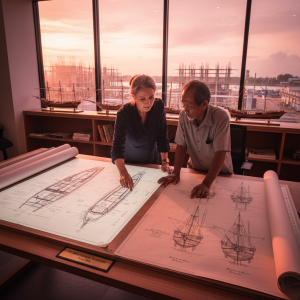
However, a modern luxury phinisi must be more than just a traditional boat. It must meet stringent international safety standards, house sophisticated mechanical and electrical systems, and provide a level of comfort equivalent to a five-star hotel. This is where the truly elite builders distinguish themselves. They do not replace tradition; they augment it. The best shipyards employ Konjo craftsmen for their unparalleled skill with wood, but they integrate their work with detailed plans from naval architects and marine engineers. I spoke with a Dutch naval architect based in Bali who specializes in these projects. “The Konjo see the spirit in the wood,” he explained. “Our job is to provide a technical framework—hydrostatic calculations, stability analysis, systems engineering—that allows that spirit to sail safely and efficiently anywhere in the world.” A builder who cannot fluently speak both of these languages—the ancient art and the modern science—is not a candidate for a top-tier project.
Material Integrity: The Unseen Foundation of a Seaworthy Vessel
The longevity and safety of your vessel begin with the timber. A phinisi is a symphony of tropical hardwoods, and the choice and sourcing of this wood are paramount. The keel, the literal backbone of the ship, is traditionally laid from a single, massive piece of ironwood, or ulin. This incredible timber, sourced from Kalimantan, has a density often exceeding 1.0 g/cm³, meaning it sinks in water. Its natural resistance to the destructive shipworm is legendary. The hull planking and frames also utilize ironwood or similarly robust species like bitti. For the decks and superstructure, the gold standard is high-grade teak, prized for its beauty, durability, and non-slip properties when wet.
A premier construction company will have an impeccable, fully transparent, and legal supply chain for these precious resources. Given Indonesia’s focus on combating illegal logging, this is not a minor detail. Prospective owners must demand proof of timber legality, typically through the SVLK (Indonesian Timber Legality Assurance System) certification. A builder’s inability to provide this documentation is a significant red flag. I recently toured a facility where the yard manager showed me their timber stock, with each log tagged and documented from its origin. “We secure our primary ironwood logs more than a year in advance for a major build,” he told me. “The quality of a 20-year vessel is determined in the first week of material selection.” The cost of this legally sourced, high-grade timber can account for up to 30% of the initial build cost, but compromising here is an invitation to disaster.
The Modern Shipyard: Where Tradition Meets Technology
While the image of a phinisi rising from a sandy beach is romantic, the reality of a luxury build demands a more controlled environment. The master builders of bespoke luxury yachts in Sulawesi have evolved beyond the beach. A top-tier phinisi construction company operates from a dedicated shipyard, not just a plot of shoreline. This facility provides critical advantages. Covered construction halls protect the timber and workers from the harsh equatorial sun and torrential rains, preventing wood from drying too quickly or being exposed to excessive moisture. A proper shipyard includes dedicated workshops for metal fabrication, electrical engineering, plumbing, and fine carpentry. This controlled environment is essential for the precise installation of modern systems.
Think of the complex network of a modern yacht: twin marine diesel engines from manufacturers like MAN or Caterpillar, multiple generators, high-capacity watermakers, sophisticated navigation and communication suites from Furuno or Simrad, and extensive HVAC systems. A 45-meter phinisi can easily require over 5,000 meters of marine-grade electrical wiring. Integrating these systems flawlessly into a wooden hull requires a level of precision and planning that is simply not possible in a makeshift environment. The best shipyards have teams of specialized technicians who work alongside the traditional boatbuilders, ensuring that the modern heart of the vessel is as robust as its ironwood hull. When you visit a potential builder, pay as much attention to their workshops and systems integration bay as you do to the hull taking shape.
Project Management and Transparency: Your Eyes on the Ground
For most clients, commissioning a phinisi is a remote process. You may be in New York, London, or Singapore, while your vessel is taking shape thousands of miles away in a corner of Indonesia. This geographical distance makes project management and communication the absolute bedrock of a successful partnership. The best phinisi construction company functions not just as a builder, but as your trusted representative on the ground. This begins with a detailed construction agreement that outlines a clear payment schedule tied to specific, verifiable milestones—keel laying, frame completion, hull planking, engine installation, and so on. A builder who asks for large, untethered upfront payments should be viewed with extreme caution.
A professional shipyard will provide, at minimum, weekly progress reports complete with high-resolution photography and detailed descriptions of the work completed. Many now offer secure client portals with regularly updated photo galleries and even live-streaming cameras in the build hall. You should have a single, dedicated point of contact—a project manager fluent in English—who can facilitate technical discussions and provide transparent updates. A typical 40-meter phinisi project takes between 18 and 24 months and can consume over 120,000 man-hours. Without a rigorous project management framework, a project of this complexity can easily veer off course in both timeline and budget. The quality of a builder’s administrative and communication infrastructure is just as important as the skill of their carpenters.
The Portfolio is Your Proof: Inspecting Past Projects
Renderings are seductive, but reality is built of wood and steel. The ultimate test of a builder’s capability is their finished work. Never commission a vessel without first-hand experience of a company’s prior projects. The best phinisi construction company will have a portfolio of completed yachts that you can see, touch, and, ideally, sail on. Many of the finest phinisis operate as luxury charter vessels in Indonesia’s spectacular cruising grounds, from Komodo National Park to the remote archipelago of Raja Ampat. Chartering a yacht for a few days, or even a week, is an invaluable form of due diligence. It allows you to assess the build quality not as a static object, but as a living, breathing vessel at sea.
Pay attention to the details. How are the finishes holding up after several years of service? Listen to the sounds of the ship underway—are there excessive creaks or vibrations? Observe the functionality of the layout. Speak with the captain and crew; they live with the boat’s strengths and weaknesses every day and are often a source of unfiltered truth. A reputable builder will also be happy to connect you with previous clients. A conversation with a past owner can reveal crucial insights into the construction process, budget adherence, and, importantly, the builder’s after-sales support. The luxury phinisi charter market in Indonesia sees weekly rates from $40,000 to over $180,000 USD. The vessels that command the highest rates are invariably those from the most respected yards, a testament to their enduring quality and design. A builder’s reputation among the top charter brokers, as detailed by tourism authorities like indonesia.travel, is a powerful indicator of their standing in the industry.
Quick FAQ on Choosing a Phinisi Builder
Q: What is a realistic budget for a custom luxury phinisi?
A: The range is wide, reflecting the bespoke nature of each project. A well-appointed 30-35 meter phinisi might start around $2 million USD. A larger, 45-55 meter vessel with superyacht-level amenities, interior design by a noted firm, and top-tier systems can range from $5 million to over $10 million. The final cost is heavily influenced by the level of interior finishing, choice of machinery, and technical specifications.
Q: Should I hire my own independent surveyor during the build?
A: Absolutely. This is a non-negotiable best practice. An independent marine surveyor, hired by and reporting only to you, acts as your technical expert on-site. They will inspect the build at critical stages, ensuring adherence to the plans and quality standards. The cost, typically a few percent of the build price, is invaluable for quality assurance and peace of mind.
Q: What is the significance of a vessel’s “classification”?
A: Classification by a recognized society like RINA (Registro Italiano Navale) or BKI (Biro Klasifikasi Indonesia) means the vessel’s design and construction have been independently verified to meet a comprehensive set of safety and structural standards. For a vessel intended for commercial charter, classification is often a legal and insurance requirement. It also significantly enhances the yacht’s resale value.
Q: How long does the entire process take, from design to delivery?
A: A good rule of thumb is 24 to 36 months. The initial design and engineering phase can take 4-6 months. The physical construction of a 40-50 meter phinisi typically takes 18-24 months. This is followed by a period of sea trials, commissioning of systems, and final interior outfitting, which can take another 2-4 months. A builder promising a significantly shorter timeline may be cutting corners.
The quest to build a phinisi is a journey back in time and a leap into the future. It is an investment in a legacy, a floating work of art that carries the spirit of the Indonesian archipelago. Choosing your partner in this endeavor requires a blend of romantic appreciation for the craft and hard-nosed business diligence. You are seeking a rare synthesis: a team that honors the Konjo traditions, masters modern engineering, and operates with unimpeachable integrity. For those ready to embark on this extraordinary journey, the master builders at phinisi shipyard represent the pinnacle of this synthesis. Engaging with a team like phinisi shipyard ensures your vision is translated into a vessel of both timeless heritage and uncompromising luxury.