Updated: August 2026
- Design & Engineering: Allocates 6-12 months for detailed architectural planning and engineering.
- Material Sourcing: Accounts for the 12+ month procurement and seasoning period for rare hardwoods.
- Artisanal Construction: Respects the 18-24 month traditional build cycle of the master craftsmen.
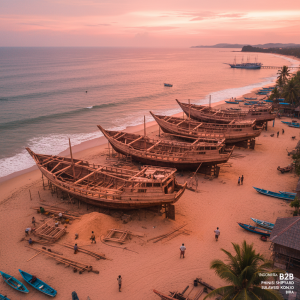
The air in Tanah Beru hangs thick and sweet with the scent of clove cigarettes, mingling with the sharp, resinous perfume of freshly cut ironwood. Under the steady, equatorial sun, the rhythmic percussion of wooden mallets against dowels provides a constant soundtrack—a sound that has echoed along this stretch of the South Sulawesi coast for centuries. You stand before the skeleton of a future king of the seas, its massive keel, a single piece of Ulin wood weighing over 20 tonnes, already resting on the sand. This is the genesis of a phinisi, and the question isn’t just how it’s built, but when the journey of its creation truly begins. For those of us who have followed these builds from concept to christening, the answer is always the same: far, far earlier than you think.
Deconstructing the 36-Month Horizon: More Than Just Wood and Sails
When clients first approach the Phinisi Shipyard, their excitement is palpable. They envision sunset cruises in Komodo or exploratory dives in Raja Ampat. Our first task is to gently re-anchor that vision to a terrestrial reality measured in months and milestones. A 36-month timeline for a 45-meter luxury phinisi isn’t an overestimation; it’s a realistic framework built around craftsmanship, logistics, and physics. The entire bespoke phinisi design process can be broken into five overlapping phases. First is the Conceptual and Naval Architecture phase, which can consume a solid 6 to 12 months alone. This is where dreams are translated into technical blueprints that must satisfy both aesthetic desires and stringent maritime safety standards, such as RINA or Lloyd’s Register classification. Following this, the critical Material Sourcing phase begins, a process that often runs concurrently and can take up to 18 months. We are not simply buying wood; we are selecting specific, sustainably harvested trees from Kalimantan, a process that involves long-term relationships with suppliers and lengthy curing times. The core Hull Construction, the most visible part of the build, takes between 12 and 18 months. This is the domain of the Panrita Lopi, the master builders whose ancestral knowledge is the soul of the vessel. Finally, the Interior Fit-Out and Systems Integration requires another 12 to 15 months, transforming the raw wooden hull into a floating five-star retreat with engines, generators, and navigation systems that represent an investment of over $500,000 on their own.
The Conceptual Phase: Dreaming in Blueprints with Master Craftsmen
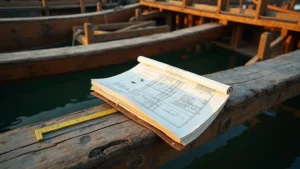
The journey of a thousand nautical miles begins not with a single step, but with a single line on a piece of paper. The initial 6-to-12-month conceptual phase is arguably the most critical part of the entire bespoke phinisi design process. This is where the vessel’s DNA is forged. As a client, your vision—be it a family-oriented vessel with a dedicated children’s cabin, a hardcore dive liveaboard with a state-of-the-art compressor room, or a charter yacht designed for ultimate indulgence—must be articulated, debated, and refined. I recall a conversation with renowned yacht designer Philippe Briand, who once told me, “A boat is a dialogue between the owner’s soul and the sea. My job is to be the interpreter.” That philosophy is at the heart of our work. This stage involves hundreds of hours of consultation, resulting in dozens of sketches and 3D renderings. We determine the number of cabins, the layout of the dive deck, the placement of the cocktail lounge, and the flow between public and private spaces. Every decision has a cascading effect; adding just one meter to the beam can increase the interior volume by nearly 8%, but it also alters the vessel’s hydrodynamics and structural requirements. This is a delicate dance between desire and engineering, a collaboration between you, our design team, and the naval architects who ensure the final vessel is not only beautiful but fundamentally seaworthy and stable. Starting this dialogue 36 months out provides the necessary space for this creativity to flourish without the pressure of an impending construction deadline.
Sourcing the Soul: The Global Quest for Materials
A phinisi is born from the earth before it ever touches the water. The integrity and character of the vessel are inextricably linked to the quality of its materials, and sourcing them is a monumental, time-consuming undertaking that begins at least 24 months before launch. The backbone of the ship is Ulin, or Borneo ironwood, one of the densest woods in the world. A single keel for a 50-meter phinisi can require a tree that has been growing for over 100 years. Securing legal, certified Ulin of this quality is a year-long process in itself, followed by a crucial 6-to-12-month seasoning period to ensure stability. The same applies to the high-grade teak used for decking and interiors, sourced from specific regions of Java or Sulawesi. But the traditional materials are only half the story. A modern luxury phinisi is a hybrid of ancient craft and cutting-edge technology. The procurement of its mechanical and electronic heart—twin MAN or Caterpillar marine engines, for example—can have lead times of 8 to 14 months from the factory in Germany or the United States. Advanced navigation and communication suites from brands like Furuno and Sailor, sophisticated watermakers, and multi-zone air conditioning systems all come with their own supply chains and timelines. Even the interior fittings, from custom-milled brass fixtures to Italian marble for the en-suites, require months of lead time. Initiating the bespoke phinisi design process early allows our team to place these critical orders well in advance, insulating the project from potential supply chain disruptions and ensuring that every single component is ready when the builders need it.
The Rhythm of the Build: Aligning with Seasons and Sacred Traditions
Building a phinisi in South Sulawesi is an act of partnership with nature. The construction timeline is not dictated solely by schematics and manpower, but by the monsoon winds and the equatorial sun. This is why a deep understanding of the local climate is factored into the 24 to 36-month schedule. The primary construction of the hull is best undertaken during the dry season, which typically runs from May through September. During these months, with rainfall averaging less than 100mm, the wood remains stable, and the sprawling, open-air shipyard is at its most productive. Conversely, the rainy season, from November to March, can see over 350mm of monthly precipitation. This period is better suited for interior work, systems installation, and other tasks that can be completed under cover. Attempting to rush the hull planking during the monsoon risks trapping moisture in the wood, a catastrophic error for the vessel’s long-term health. Beyond the climate, the build is paced by cultural traditions that are deeply respected by the craftsmen. The art of phinisi boatbuilding was inscribed by UNESCO as an Intangible Cultural Heritage of Humanity in 2017. This heritage includes a series of ceremonies that mark key construction milestones, from the laying of the keel to the vessel’s final launch. These are not mere formalities; they are seen as essential for blessing the ship and ensuring its safety at sea. Factoring in these vital seasonal and cultural rhythms is a non-negotiable aspect of an authentic build, reinforcing the need for a generous and flexible timeline.
Timing the Charter Market: A Strategic Launch for Peak Demand
For many owners, a bespoke phinisi is not just a private escape but also a significant investment intended for the lucrative charter market. If this is part of your plan, then the “when” of starting the design process becomes a critical strategic decision tied directly to market cycles. Indonesia’s premier cruising grounds operate on opposing seasons. The Komodo National Park and the Lesser Sunda Islands see peak demand from April to November, when the seas are calm and the weather is dry. Conversely, the world-class dive sites of Raja Ampat are best visited between October and April, outside of their monsoon season. A strategically timed launch can mean the difference between a blockbuster first season and a slow start. For example, to capitalize on the Komodo high season, your vessel should be fully commissioned, crewed, and ready for its first charter guests by late March. Working backward from this date, a 30-month build and design process would need to commence no later than September three years prior. This allows the vessel to be marketed effectively for up to a year before its launch, securing valuable advance bookings that can amount to over $1 million for a popular 6-cabin yacht. According to tourism data from indonesia.travel, demand for luxury marine tourism has seen a year-over-year growth of nearly 12%, making a well-timed entry into this market more valuable than ever. Starting early is not just about building the ship right; it’s about launching your business right.
A Quick FAQ on the Phinisi Design & Build Timeline
Can the standard 24-36 month timeline be expedited?
While minor efficiencies can be found, accelerating the core timeline of a traditional build is highly discouraged. The integrity of a phinisi relies on patient craftsmanship and the natural curing and settling of massive timbers. Rushing these organic processes, especially the 12-month wood seasoning period, can compromise the structural integrity and longevity of the vessel. Quality and safety are paramount, and they are directly tied to respecting this established rhythm.
What is the very first step I should take to begin the process?
The first step is a deep, comprehensive consultation with our team. Before any sketches are drawn, we need to understand your “why.” Is this a private vessel for family adventures? A commercial charter yacht? An oceanographic research platform? This initial brief, which can take several meetings to finalize, becomes the foundational document for the entire bespoke phinisi design process, guiding every decision from the naval architecture to the thread count of the linens.
How are payments structured throughout the long build process?
Payments are structured according to key construction milestones, which protects both the client and the shipyard. A typical schedule involves an initial deposit (around 15-20%) to secure a build slot and commence the design phase, followed by installment payments upon the completion of major stages: keel laying, hull completion, deck installation, engine installation, and final delivery. This transparent, phased approach ensures that your investment directly tracks the tangible progress of your vessel.
Does the Phinisi Shipyard also handle the complex naval architecture?
Yes, we facilitate and manage the entire process. We work with a select group of world-class naval architects who specialize in marrying the traditional aesthetics of the phinisi form with modern principles of hydrodynamics, stability, and safety. They produce the detailed technical drawings and structural calculations required for international classification societies like Bureau Veritas, ensuring your vessel is not only a work of art but a certified, modern seafaring yacht.
The question of when to start is, ultimately, a question of ambition. Do you wish for a simple boat, or do you desire a legacy? The creation of a true phinisi is a profound journey, a collaboration that spans years and continents, uniting your vision with the ancestral skills of the Bugis master builders. It is a process that cannot be rushed, as its very value lies in the time invested. The sounds of the shipyard in Tanah Beru—the adze shaping a timber, the saw cutting a plank—are a call to the future. To begin your own dialogue with the sea and to see your vision rise from these storied sands, the best time to start is now. Let us begin the conversation and lay the keel of your dream. Explore the possibilities with the master builders at the phinisi shipyard today.