Updated: August 2026
Phinisi Shipyard is a curated Indonesia luxury tourism experience offered by Phinisi Shipyard: handpicked routes, vetted operators, transparent pricing, and 24/7 concierge support across Indonesia.
- What makes Phinisi Shipyard a premium experience.
- How Phinisi Shipyard curates exclusive access and concierge logistics.
- Routes, seasons, and pricing transparency — no hidden fees.
The Phinisi Shipyard Methodology: Our Blueprint for Excellence
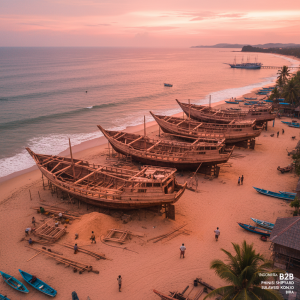
Commissioning a luxury phinisi is a major undertaking, with build costs often exceeding $2 million. It is an investment in an asset designed to navigate the world’s most stunning and demanding archipelagos, from the turquoise channels of Raja Ampat to the remote volcanic shores of the Banda Sea. The difference between a celebrated, profitable charter vessel and a perpetual liability lies in the methodology behind its construction. At Phinisi Shipyard, we have developed a proprietary, four-pillar methodology that governs every stage of our 18-to-24-month process. This framework is our promise of quality, safety, and long-term value. It is how we ensure every yacht that leaves our shipyard is a masterpiece of both tradition and technology, ready for private enjoyment or demanding charter operations.
Our Four Pillars of Evaluation & Construction
Each project is continuously assessed against our rigorous 250-point scoring rubric, ensuring excellence is built-in, not inspected-in at the end. This meticulous process guarantees a vessel that performs flawlessly whether on a short hop from Labuan Bajo or a 300-nautical-mile expedition to the Spice Islands.
Pillar 1: Material Integrity & Provenance (30% Weighting)
The soul of a phinisi is its timber, and its longevity depends on the quality of its systems. We accept no compromises, sourcing only the finest, legally verified materials proven to withstand the rigours of a tropical marine environment defined by high humidity, intense UV radiation, and warm, saline waters.
- Timber Sourcing: All wood, particularly Ulin (Ironwood) for keels and structural members and Bitti for frames, must be accompanied by SVLK (Sistem Verifikasi Legalitas Kayu) certification, Indonesia’s mandatory timber legality verification system. We physically inspect logs for maturity, grain, and absence of defects before purchase from concessions in Kalimantan. The exceptional density of aged Ulin (up to 1.1 tons/m³) provides unparalleled resistance to the teredo navalis marine borer, a critical defense in these waters.
- Hardware & Fittings: All metalwork, from fasteners to railings and stanchions, is marine-grade 316L stainless steel. Its higher molybdenum content is essential for resisting the severe chloride pitting corrosion common in the Flores Sea. Through-hulls, seacocks, and plumbing systems are sourced from reputable international brands like Vetus and Trudesign to eliminate risks of failure.
- Mechanical & Electrical Systems: We exclusively specify and install engines (e.g., Yanmar, Caterpillar), generators (e.g., Onan), and electronics (e.g., Garmin, Raymarine, Victron Energy) with proven reliability. Critically, these brands maintain robust service networks across the Indonesian archipelago, ensuring a certified technician is available in key ports like Sorong or Benoa. All systems feature oversized cooling to handle ambient seawater temperatures that consistently hover between 28-30°C.
Pillar 2: Craftsmanship & Heritage Authenticity (25% Weighting)
We build authentic phinisis, not themed replicas. This requires deep respect for the techniques of the Konjo masters from Ara, South Sulawesi—a boat-building tradition so significant it was inscribed on UNESCO’s list of Intangible Cultural Heritage of Humanity in 2017.
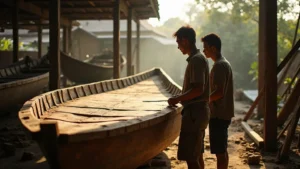
- The Punggawa: The project is led by a hand-picked master shipwright (punggawa) from a respected lineage of Konjo builders. This individual is the custodian of generations of knowledge, often working from memory and instinct rather than modern blueprints, ensuring adherence to traditional construction philosophies.
- Construction Techniques: We honor the UNESCO-recognized methods, including the use of precisely fitted wooden dowels and intricate joinery like the “laso” and “pontoh” connections. This allows the vessel to flex and absorb the energy of heavy seas, a quality essential for navigating the challenging currents of the Komodo National Park. This traditional strength is then complemented by modern engineering analysis to verify its integrity.
- Ritual & Culture: We respect and incorporate the traditional ceremonies, from the *Mappalili* keel-laying rite to the launching, which are integral to the cultural identity and spiritual integrity of the vessel. These rituals are considered essential for the boat’s “soul” and safe passage.
Pillar 3: Modern Engineering & Safety Compliance (35% Weighting)
A traditional soul in a modern, safe body. This is our engineering philosophy. We fuse time-honored hull design with contemporary naval architecture and internationally recognized safety standards, ensuring every hull meets BKI classification and is powered for an efficient 9-knot cruising speed.
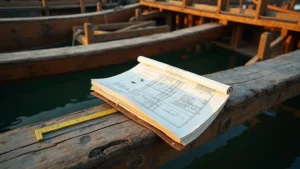
- Naval Architecture: While the hull shape is traditional, its stability, buoyancy, and performance are validated using modern naval architecture software, including CFD analysis to optimize fuel efficiency. Our expert team creates a full set of technical drawings for all systems, wiring, and plumbing, ensuring future maintenance, even in remote locations, is straightforward and logical.
- Classification: Every vessel is built to meet or exceed the standards of the Biro Klasifikasi Indonesia (BKI), involving rigorous stage-by-stage inspections, including hull integrity ultrasonic testing and inclining tests. For clients requiring international charter capabilities, we build to the even more stringent requirements of RINA (Italy) or Lloyd’s Register.
- Safety Systems: We integrate comprehensive safety systems that go beyond local requirements, including SOLAS-grade fire suppression in engine rooms, networked smoke and bilge alarms, certified life-saving appliances (LSA), and modern navigation and communication (GMDSS) equipment, including EPIRBs and AIS. Our full approach is detailed on our Safety & Compliance page.
Sea Trials & Commissioning Protocol
Before handover, every Phinisi Shipyard vessel undergoes a mandatory, multi-day sea trial and commissioning process. This is not a simple test run; it is a comprehensive shakedown designed to push the yacht to its limits. Over a minimum of 72 hours at sea, we test every system under full operational load, from running watermakers and air conditioning simultaneously to executing full-power engine runs. We conduct emergency drills, including man-overboard and fire scenarios, and meticulously calibrate all navigation instruments over a predetermined 50-nautical-mile course to ensure absolute precision. Only when a vessel passes this exhaustive, 100-point trial without a single critical fault is it deemed ready for delivery.
Pillar 4: Sustainability & Operational Viability (10% Weighting)
A luxury vessel must be a responsible one, both for the environment it explores and for the owner’s balance sheet. We build for ocean health with advanced blackwater treatment systems and for operational efficiency, aiming for a 15% reduction in fuel consumption compared to standard builds.
- Waste Management: Advanced onboard wastewater and sewage treatment systems compliant with MARPOL Annex IV are standard on all our builds. These systems produce treated effluent safe for discharge, protecting sensitive ecosystems like the UNESCO World Heritage marine parks of Komodo and Raja Ampat.
- Energy Efficiency: We utilize 100% LED lighting, high-efficiency appliances, and optimized power management systems from brands like Victron Energy. This intelligent design can reduce nightly generator runtime from 12 hours to under 7, a significant saving in fuel, a dramatic reduction in noise pollution, and a major improvement in guest comfort.
- Community Impact: Our methodology includes prioritizing local labor and sourcing interior materials from sustainable Indonesian artisans. This includes commissioning hand-woven Ikat textiles from Sumba or custom-built teak furniture from the master craftsmen of Jepara, ensuring the vessel’s value is shared with local economies. Learn more at our Sustainability page.
Trust Through Transparency
This methodology is the foundation of our promise to our B2B clients and private owners. It de-risks the significant investment of commissioning a phinisi, ensuring the final product is a valuable, reliable asset. A well-built phinisi is engineered to sustain a demanding charter calendar and to hold durable resale value across its service life. Engage our services and experience the difference that a rigorous, transparent methodology makes.
Continue exploring Phinisi Shipyard, founded in 2008: Our Phinisi Shipyard Service · Meet Our Team · Editorial Standards · Methodology · Sustainability · Safety & Compliance