Updated: August 2026
Phinisi Shipyard is a curated Indonesia luxury tourism experience offered by Phinisi Shipyard: handpicked routes, vetted operators, transparent pricing, and 24/7 concierge support across Indonesia.
- What makes Phinisi Shipyard a premium experience.
- How Phinisi Shipyard curates exclusive access and concierge logistics.
- Routes, seasons, and pricing transparency — no hidden fees.
The Modern Phinisi Yacht Construction Process: From Keel to Mast
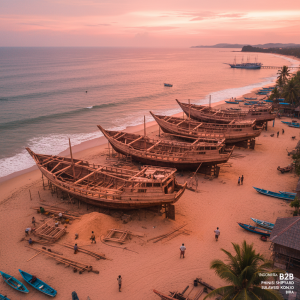
The creation of a phinisi yacht bridges centuries of maritime heritage—an art form recognized by UNESCO in 2017—with the exacting standards of modern naval engineering. It begins not with a factory production line, but with a conversation and a deep respect for the ancestral knowledge of the Konjo people. At our Bira-based phinisi shipyard, located approximately 155 kilometers from Makassar, we orchestrate this complex process, transforming raw timber into a vessel of unparalleled character, ready for the Indonesian archipelago.
Conceptualisation & Naval Architecture
Every phinisi begins as an idea. Whether for a private family fleet or a commercial charter operation with a capacity for 12 guests, the initial stage involves translating a client’s vision into a viable concept. This is where tradition meets technology. Our process commences with collaborative workshops to define the vessel’s purpose, a typical operational range of over 1,500 nautical miles, guest capacity, and desired aesthetic. This brief is then handed to our partners in yacht naval architecture, who develop the foundational design.
Using advanced CAD software like Rhino 3D, they produce a set of over 100 comprehensive blueprints detailing every aspect of the yacht, from hull lines and stability calculations to weight distribution. These technical drawings serve as the master plan, ensuring the vessel is not only beautiful but also safe, efficient, and compliant with international maritime standards. This meticulous planning phase is critical, aligning the final vessel with the stringent requirements of a classification society like Biro Klasifikasi Indonesia (BKI).
Laying the Keel: A Bira Tradition
Long before the first plank is shaped, the spiritual foundation of the phinisi is laid. In the heart of Bulukumba, South Sulawesi, construction begins with a sacred ceremony on an auspicious day determined by the local calendar. The laying of the keel, or *Lemo-Lemo*—often a single timber stretching over 20 meters in length—is a ritual steeped in Konjo tradition. It is a powerful moment, attended by the master boatbuilders (*punggawa*), the vessel’s future owner, and the local community, involving offerings to the land, sea, and spirits of the wood.
This ceremony marks the official commencement of the build. The keel itself, a massive timber of ironwood (*kayu ulin*) sourced from Kalimantan, is blessed. This wood is chosen for its legendary density—exceeding 1.0 g/cm³, causing it to sink in water—and its resistance to marine borers. Prayers are offered for the safety of the craftsmen and for the vessel, which, with a well-maintained ironwood hull, can have a service life exceeding 50 years. This act embeds the phinisi in a cultural lineage stretching back generations.
Hull Construction & Planking
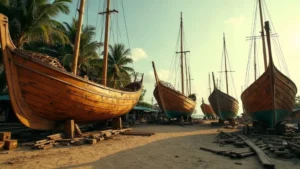
The beachfront of Tanah Beru is the cradle of phinisi construction, where a team of up to 20 Konjo boatbuilders brings the vessel’s form to life. They employ a remarkable technique, building the hull shell first and fitting frames later. This ancient method relies on generational knowledge, shaping curves by eye. Planks of teak or ironwood, often 5-7 centimeters thick, are steamed and bent into place, fastened with a combination of traditional wooden dowels and modern, marine-grade 316 stainless steel bolts for maximum corrosion resistance.
While honouring this heritage, our shipyard integrates modern best practices to enhance longevity. All marine-grade materials are vetted, such as using modern polymer compounds instead of the traditional *baruk* bark for caulking. We employ advanced sealants like Sikaflex-291i between planks and apply at least three coats of marine epoxy resin below the waterline. This synthesis ensures a watertight finish that far exceeds traditional standards, resulting in a hull with the authentic character of a phinisi and the reliability of a modern luxury yacht.
Deck, Superstructure & Interior Fit-Out
Once the hull, often weighing over 100 tons, is complete on the Bira sand, the focus shifts to creating the living spaces. The main deck, upper decks, and superstructure are constructed, defining the yacht’s silhouette. This stage involves immense skilled carpentry, laying strong deck beams and finishing over 250 square meters of exterior space with flawless, 20mm-thick teak planking. This premium decking is not only beautiful but also exceptionally resilient to the intense tropical sun and salt spray found from Komodo to Raja Ampat.
Simultaneously, the vision for the luxury yacht interiors begins to take physical form. This is a highly collaborative phase, often involving specialist interior architects and the client’s personal design team. Our workshops become a hub of fine joinery, where master craftsmen create bespoke cabinetry, wall panelling, and furniture from the finest locally and internationally sourced materials. Every detail, from the book-matched veneers in the master suite to the hand-stitched upholstery in the saloon, is executed to superyacht standards.
Propulsion & Systems Integration
A modern phinisi is a complex fusion of wood and wire. The propulsion and systems integration phase is where the vessel is endowed with its mechanical heart and electronic nervous system. The yacht engine installation is a pivotal moment, requiring precision engineering to position and align the main engines, gearboxes, and propeller shafts within the wooden hull. We work with globally recognised marine engine manufacturers to ensure reliability, efficiency, and ease of service throughout Indonesia.
Beyond propulsion, our teams of marine electricians and engineers install the myriad of systems that enable modern comfort and safety at sea. This includes generators for electrical power, desalination plants for fresh water, air conditioning systems, and the full suite of navigation and communication electronics at the helm. Meticulous planning ensures that all plumbing, wiring, and ducting is installed cleanly, accessibly, and in accordance with the highest maritime safety codes.
Finishing, Sea Trials & Classification
The final stage of construction is a painstaking process of refinement. Countless hours are dedicated to sanding, sealing, and varnishing every square centimetre of woodwork to achieve a deep, lustrous finish that protects the timber and highlights its natural beauty. The towering masts are stepped, the rigging is installed, and the sails are bent on, completing the iconic phinisi profile.
Before handover, the yacht must prove itself on the water. Rigorous Indonesia sea trials are conducted in the Flores Sea, testing every system under real-world conditions. We assess engine performance, sailing characteristics, maneuverability, and the function of all onboard equipment. Following successful trials, the vessel undergoes a final survey by a yacht classification society, such as the Biro Klasifikasi Indonesia (BKI) or an international equivalent. This certification provides the ultimate verification of the yacht’s structural integrity and safety, clearing her for commercial charter or private exploration of the archipelago.
Begin Your Phinisi Legacy
The construction of a phinisi is more than a project; it is the creation of a legacy. It is a process that demands expertise, passion, and a profound understanding of both ancient craft and modern engineering. To begin a confidential discussion about commissioning your own vessel from our phinisi shipyard, please contact our build coordinators at [email protected] or via WhatsApp on +62 811-3941-4563.
Frequently Asked Questions
How long does the phinisi construction process take?
The timeline for building a custom phinisi yacht typically ranges from 18 to 24 months, depending on the vessel’s size, complexity, and interior specifications. The initial naval architecture and design phase can take several months, followed by the physical construction on the beach in Bira. A professional phinisi shipyard manages this schedule meticulously to ensure milestones are met without compromising the exceptional quality of the craftsmanship, which cannot be rushed.
What types of wood are used in construction?
We primarily use two exceptional Indonesian hardwoods. The keel and frames are crafted from ironwood (*kayu ulin*), renowned for its incredible density and near-impermeability, making it exceptionally resistant to marine borers and rot. For the hull and deck planking, as well as much of the interior joinery, we use high-grade teak (*kayu jati*), prized for its beauty, stability, and natural oils that protect it from the harsh tropical environment. All timber is sustainably and legally sourced.
Can I use my own naval architect or interior designer?
Absolutely. We encourage a collaborative approach and have extensive experience working with international naval architects and interior design firms chosen by our clients. Our role as the phinisi shipyard is to facilitate this partnership, translating their designs into reality through the hands of our Konjo craftsmen and technical teams. We ensure a seamless integration of their vision with the practicalities of traditional boatbuilding and modern marine systems, ensuring the final vessel is a true reflection of your intent.
What classification standards can you build to?
We build vessels to meet various national and international standards, tailored to the yacht’s intended use. For commercial charter operations within Indonesian waters, we build in accordance with the rules of the Biro Klasifikasi Indonesia (BKI). For clients requiring international recognition for private use or global charter, we can construct the vessel in liaison with international bodies like RINA or Lloyd’s Register, ensuring the design, materials, and systems meet their stringent requirements for safety and build quality.
How is traditional Konjo boatbuilding knowledge preserved?
Preservation is at the core of our philosophy. We ensure the *punggawa* (master boatbuilder) leads the hull construction, using the same shell-first techniques passed down through generations. This knowledge is not documented in manuals but lives in the experience of the craftsmen. By providing a platform where this heritage is the centrepiece of a modern luxury project, we create sustainable, high-value employment that makes this ancient craft economically viable and ensures its continuation.
Are the yachts really built on the beach?
Yes, the foundational stages of hull construction take place on the beachfront of Tanah Beru or Bira, in keeping with centuries of tradition. This is where the keel is laid and the hull is planked and framed. Once the hull is complete, it is launched into the sea and moved to a nearby harbour or finishing facility where the detailed work of installing engines, systems, and luxury yacht interiors is completed in a more controlled environment.
What kind of engines are typically installed?
We install reliable, high-quality marine diesel engines from globally recognised brands such as Yanmar, MAN, or Caterpillar. The choice of engine—and whether a single or twin-engine configuration is used—depends entirely on the yacht’s size, displacement, and the owner’s performance requirements. Our technical team calculates the precise power needed for efficient cruising speeds and ensures the yacht engine installation is executed flawlessly for long-term reliability and ease of maintenance.
Can I visit the shipyard during the construction of my yacht?
We insist on it. Client involvement is crucial. We provide regular, detailed progress reports with photographs and videos, but we believe there is no substitute for seeing the craftsmanship firsthand. We encourage and help facilitate client visits to Bira at key boatbuilding stages, such as the keel-laying ceremony, the completion of the hull, and the installation of major systems. This allows for a deeper connection with the vessel and the people building it.
How do you manage the quality of the luxury yacht interiors?
Quality control for interiors is a multi-stage process. It begins with the careful selection and kiln-drying of all timber to ensure stability in the marine environment. We have a dedicated team of highly skilled joiners and cabinet makers who specialise in fine finishing. We work from detailed 3D renderings and workshop drawings, and our project managers conduct daily inspections to ensure every joint, veneer, and finish meets superyacht standards, whether the work is done by our in-house team or a specialist subcontractor.
What is the purpose of Indonesia sea trials?
Sea trials are the final, critical test of the entire vessel. Their purpose is to verify that the yacht performs as designed and that all systems function correctly under real-world operational stress. We test everything from top speed and fuel consumption to the anchor system and navigation electronics. It is a comprehensive shakedown period that allows us to identify and resolve any issues before the official handover, ensuring the yacht is delivered in a safe, reliable, and fully operational condition.