Updated: August 2026
- They fuse centuries-old artisanal techniques with contemporary naval architecture and safety standards.
- The process involves a deeply collaborative design journey, from hull configuration to interior material selection.
- Each vessel is engineered specifically for the unique currents, coral reefs, and island topographies of Indonesia.
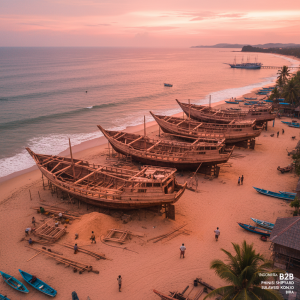
The air in Tana Beru, South Sulawesi, hangs thick with the sweet, sharp scent of freshly sawn ironwood and the faint, briny tang of the Flores Sea. On the white-sand shore, the rhythmic thud of wooden mallets against chisels provides a percussive soundtrack that has echoed here for centuries. Before me, the skeleton of a 45-meter vessel rises from the beach, its ribs arcing towards the sky like a leviathan’s bleached bones. This is not a factory floor; it is a cradle of creation. Here, on this ancestral building ground, the journey of commissioning a private yacht for the wilds of Komodo begins, not with a sales pitch, but with a shared understanding between an owner and a master builder—a dialogue that shapes wood, steel, and a vision into a vessel with a soul.
The Komodo Imperative: Why a Bespoke Vessel is Non-Negotiable
To speak of Komodo is to speak of a realm that defies easy navigation. This is not the placid Caribbean. The Komodo National Park, a UNESCO World Heritage site established in 1980, is a dramatic tapestry of 29 volcanic islands covering over 1,733 square kilometers. Its true character is defined by the fierce currents of the Sape and Linta Straits, where the Indian and Pacific Oceans collide, creating whirlpools and tidal flows that can surge at over 10 knots. For the serious explorer, diver, or private sojourner, an off-the-shelf yacht is simply an inadequate tool for the job. The region demands a vessel conceived for its specific challenges and opportunities. A custom phinisi, born from a tradition of navigating these very waters, is the definitive answer. The design process begins with the destination in mind: a shallow draft to access the secluded pink-sand coves of Padar Island, a reinforced hull to provide peace of mind in unpredictable seas, and a deck layout optimized for world-class diving operations at sites like Batu Bolong. Engaging a custom phinisi boat builder is less a luxury and more a prerequisite for unlocking the archipelago’s full potential, ensuring the vessel is not merely visiting Komodo, but is a part of its seascape.
The Genesis of a Dream: The Initial Consultation
My conversation with Pak Hasyim, a third-generation boat builder whose hands bear the roadmap of a life spent shaping wood, began not with blueprints, but with questions about purpose. “What is the boat’s spirit?” he asked, sipping thick, sweet coffee. “Is she for family, for science, for charter, or for solitude?” This is the foundational stage of the bespoke process. A client’s lifestyle, passions, and long-term vision are the primary design drivers. One recent commission I followed was for a European family intending to spend three months a year aboard. Their brief to the artisans at Phinisi Shipyard: Master Builders of Bespoke Luxury Yachts in Sulawesi prioritized multi-generational living: a sound-proofed media room for teenagers, a master cabin with a private aft terrace for the parents, and a galley designed as an open, social hub for cooking classes with the onboard chef. Conversely, a vessel intended for the high-end charter market might prioritize convertible twin-to-king cabins, a dedicated spa treatment room, and extensive dive facilities, including Nitrox membrane systems and a separate rinse station for underwater camera gear. This initial dialogue, which can span several days, determines everything from the gross tonnage and number of cabins—typically between 5 and 7 for a 40-50 meter yacht—to the operational range, which often needs to exceed 2,000 nautical miles for true archipelagic independence.
From Blueprint to Bulkhead: Marrying Tradition with Technology
The phinisi tradition, inscribed by UNESCO as an Intangible Cultural Heritage of Humanity, is an oral one, passed down through generations without formal plans. The genius of a modern custom phinisi boat builder lies in their ability to honor this heritage while integrating 21st-century naval architecture. The process starts with the laying of the keel, a ceremony known as “Lelang,” which involves rituals to bless the vessel. The primary timbers are selected with surgical precision: immensely dense and durable ironwood (Ulin) for the keel and frames, prized for its near-total resistance to marine borers, and high-grade teak for the decks and superstructure. While the hull takes shape using traditional techniques—planks are steamed and bent by hand, fitted together with an artisan’s eye—the digital world runs in parallel. Naval architects use advanced 3D modeling and computational fluid dynamics (CFD) software to analyze stability, hydrodynamics, and structural integrity, ensuring the vessel meets stringent international standards like SOLAS or RINA classification. This duality is the hallmark of a contemporary phinisi; it is a vessel built by hand and heart, but verified by data and engineering, a perfect synthesis of past and future.
The Soul of the Ship: Curating the Interior Experience
If the hull is the phinisi’s body, the interior is its soul. This is where the collaboration with the owner becomes most intimate. The objective is to create a floating private residence that reflects personal taste while remaining connected to its Indonesian context. I once toured a newly launched yacht where the owner, a collector of Southeast Asian art, had worked with the design team to integrate his collection seamlessly. The main salon featured backlit panels of hand-carved Jepara teak, while the master suite’s headboard was a magnificent piece of hand-woven Sumba ikat textile, framed like a masterpiece. The materials are a celebration of the archipelago’s natural wealth: vanities carved from Sumatran volcanic rock, flooring of sustainably sourced merbau wood, and soft furnishings using organic, locally dyed cottons. The layout itself is a bespoke creation. A recent 55-meter build by phinisi shipyard included a climate-controlled wine cellar for 300 bottles, a dedicated yoga and meditation deck on the forepeak, and a library with floor-to-ceiling bookshelves. These are not catalogue options; they are direct translations of an owner’s lifestyle into physical space, a process that can take 18 to 24 months and represents a significant portion of the total investment, which can range from $2 million to upwards of $7 million for a vessel of this caliber.
Engineering for the Archipelago: Power, Performance, and Practicality
A beautiful interior is irrelevant if the vessel cannot perform its primary function: to move through the water safely, efficiently, and comfortably. The engineering phase of a custom build is a complex ballet of balancing power, range, and onboard comfort. For navigating the demanding currents of Komodo, the propulsion system is critical. Most owners opt for twin marine diesel engines from proven manufacturers like Yanmar or Caterpillar, typically in the 400-600 horsepower range, providing enough power to make headway against strong tides while maintaining fuel efficiency for long-range cruising. Onboard systems are designed for self-sufficiency, a necessity when operating hundreds of miles from the nearest major port, as detailed on Indonesia’s official tourism site. This includes redundant, sound-insulated generators for whisper-quiet operation at night, high-capacity watermakers producing over 5,000 liters of fresh water per day, and advanced waste treatment systems that far exceed environmental regulations. The deck and service areas are also meticulously planned. A professional custom phinisi boat builder will design dive stations with individual gear lockers, integrated air compressors, and a low-profile dive tender that can be launched swiftly and safely via a dedicated crane. Every technical element is a deliberate choice, made to enhance the experience of exploring Indonesia’s 17,508 islands.
Quick FAQ: Commissioning Your Komodo Phinisi
How long does the custom build process typically take?
From the initial design consultation to the final sea trials, a fully custom phinisi yacht between 35 and 55 meters generally takes 18 to 24 months. The timeline is influenced by the complexity of the interior design, technical specifications, and the curing time for the selected hardwoods.
What is the history and significance of the Phinisi?
The Pinisi (or Phinisi) is a traditional two-masted Indonesian sailing ship, originally built by the Konjo people of South Sulawesi. For centuries, these vessels were the backbone of inter-island trade. Today, their robust design has been adapted for luxury liveaboards, blending their iconic silhouette with modern amenities.
Can I incorporate sustainable features into the design?
Absolutely. Sustainability is a core consideration for many modern owners and builders. This can include sourcing FSC-certified or reclaimed timber, installing advanced black and grey water treatment plants, integrating solar panels to reduce generator reliance, and designing systems for optimal fuel efficiency.
What makes a phinisi’s design superior for Indonesian waters?
The traditional phinisi hull is incredibly robust and voluminous, providing exceptional stability in varied sea states. This, combined with a relatively shallow draft, allows access to remote bays and anchorages that are inaccessible to deeper-keeled monohull yachts, making it the perfect platform for archipelagic exploration.
The journey of creating a custom phinisi is as profound as the voyages she will eventually undertake. It is an act of patronage, a preservation of ancient craftsmanship, and the ultimate expression of a personal vision. To stand on the shores of Tana Beru and watch a vessel take form, plank by plank, is to witness the birth of a legacy. This is not merely about acquiring a yacht; it is about commissioning a floating masterpiece, an heirloom perfectly attuned to the world’s most extraordinary marine environment. To begin the conversation about your own legacy in the Indonesian archipelago, connect with the master artisans at phinisi shipyard. The voyage begins not with a map, but with a blueprint born from a dream.