Updated: August 2026
- Months 1-3: Sourcing of specific hardwoods like ironwood and teak, followed by foundational rituals.
- Months 3-15: The hull is constructed first, with ribs inserted later—a method unique to the Konjo people.
- Months 15-24: Modern outfitting, mast stepping, and a communal launch ceremony complete the build.
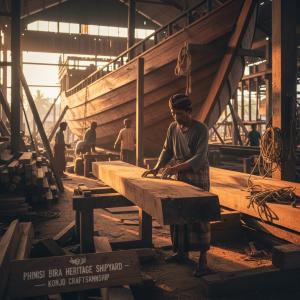
The air on the beaches of Tana Beru, South Sulawesi, is thick with the scent of raw ironwood and the sharp tang of the Flores Sea. Before you stands not a factory, but a living workshop. The rhythmic, percussive sound is not machinery, but the precise thud of an adze in the hands of a Konjo master builder, or punggawa, as he shapes a plank. Here, rising from the white sand, is the skeletal frame of a future king of the Indonesian archipelago: a phinisi. To witness this is to step back in time. Understanding the traditional phinisi building timeline is not about tracking metrics on a project management chart; it’s about appreciating a slow, sacred craft, a generational dance between man, wood, and sea. From a single log to a vessel capable of navigating the world’s most diverse marine ecosystem, this is a journey measured in seasons, not days.
Months 1-3: The Soul of the Wood and the Blessing of the Keel
Every phinisi begins its life deep in the forests of Sulawesi or Kalimantan, long before a single tool touches its timber. The first and most critical stage of the entire timeline is the selection of the wood. The punggawa, the master builder who holds the unwritten blueprints in his mind, will often lead this expedition himself. He seeks specific trees for specific purposes. For the keel, frames, and other structural elements below the waterline, only Ulin, or ironwood (Eusideroxylon zwageri), will suffice. With a density often exceeding 1.0 g/cm³, it is one of the few timbers in the world that sinks in water, offering unparalleled resistance to the marine borers and rot that plague lesser woods. For the hull and decking, the builders select Bitti (teak) for its strength, flexibility, and rich color. The sourcing process alone can take up to a month, as logs weighing several tonnes are carefully extracted and transported. Before the first cut is ever made, a series of rituals are performed to appease the spirits of the forest and the sea. As one punggawa in Bira once explained to me, “The wood has a spirit. We must ask its permission to become a boat. If we do not show respect, the boat will be unhappy in the water.” This phase culminates in the laying of the keel, or lunas. This ceremony, often involving the sacrifice of an animal and prayers led by a local elder, marks the true birth of the vessel. The keel is not merely a structural component; it is the phinisi’s spine, its soul, and its placement sets the course for the entire traditional phinisi building timeline.
Months 3-8: Ribs Last, a Defiance of Western Naval Architecture
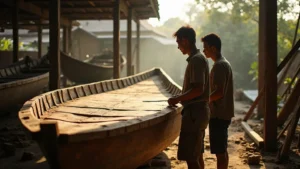
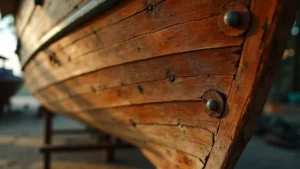
Herein lies the most profound distinction between Konjo boat-building and its Western counterparts. While European and American traditions dictate that a ship’s frame or ribs are built first, creating a skeleton onto which a skin of planks is attached, the phinisi is born from the outside in. Following the keel-laying, the punggawa and his team begin shaping and joining the hull planks directly to the keel. Using little more than hand-saws, adzes, and incredible generational knowledge, they erect the vessel’s skin first. Planks are heated over controlled fires, making them pliable enough to be bent into the hull’s elegant, sweeping curves. They are then joined together using a system of thousands of wooden dowels, or passak, hammered into precisely drilled holes. This ancient technique predates the widespread use of iron nails and creates a remarkably strong and flexible hull. It is only after the hull shell is substantially complete that the team begins fitting the frames *inside* the structure, shaping each rib to match the hull’s existing curvature. This method, recognized by UNESCO as an Intangible Cultural Heritage of Humanity, requires an almost supernatural level of spatial reasoning and intuition. No laser levels or CAD models are present; the ship’s symmetry and balance are achieved by eye, a skill passed from father to son for at least 500 years. This phase is labor-intensive, with a team of 10 to 12 men working six days a week under the tropical sun.
Months 8-15: Sealing the Hull and Raising the Decks
As the vessel’s hull nears completion, it stands on the beach like a great wooden cathedral, its form both robust and graceful. The next critical step is ensuring its watertight integrity, a process that again relies on natural materials. The seams between each hull plank are meticulously caulked. Traditionally, this was done using the bark of the gelam tree (a species of paperbark), which is pounded into a fibrous material and hammered into the gaps. When this bark becomes wet, it swells to create a perfect, organic seal that can last for decades. This method is still used on many authentic builds, though modern sealants are sometimes used in conjunction for added security. With the hull sealed, the focus shifts upward. Massive, hand-hewn beams are laid across the vessel to support the main deck. The installation of these beams locks the hull’s shape in place, providing immense transverse strength. A 40-meter phinisi may require more than 20 of these beams, each carved from a single log. Once the beams are set, the decking is laid, transforming the open hull into a structured, multi-level space. This is a pivotal moment, as it marks the point where the vessel truly begins to feel like a ship. It is at this stage that the vision of a bespoke luxury vessel, like those expertly realized by the master builders at Phinisi Shipyard, truly begins to take physical form, providing the canvas for the interior architecture to come.
Months 15-20: The Marriage of Tradition and Modern Luxury
While the hull’s construction is an exercise in pure tradition, the interior fit-out is where centuries-old craftsmanship meets 21st-century expectation. This phase of the traditional phinisi building timeline often involves a different team of specialized carpenters, electricians, and engineers who work in concert with the Konjo builders. The raw, cavernous space inside the hull is transformed into elegant guest cabins, a professional galley, climate-controlled saloons, and sophisticated navigation stations. The materials shift from the rugged ironwood of the hull to the refined beauty of teak, mahogany, and rattan for cabinetry, paneling, and furniture. This stage can easily account for more than 50% of the project’s total man-hours and budget. The challenge, as any designer in this space will attest, is integrating modern systems without compromising the vessel’s authentic soul. This means cleverly hiding plumbing, wiring, and air conditioning ducts. It means installing powerful marine engines—often a pair of Mitsubishi or Yanmar diesels producing over 500 horsepower each—and generators capable of powering a small village. A modern luxury phinisi must also house desalination plants that can produce over 5,000 liters of fresh water per day and extensive navigation suites from brands like Furuno or Garmin. This delicate integration is a specialty of our work here at the phinisi shipyard, ensuring every vessel is as technologically advanced as it is culturally significant.
Months 20-24: Masts, Sails, and the Walk to the Sea
The final construction phase sees the phinisi receive its most iconic features: its two towering masts and seven sails. The masts themselves are often crafted from a single, massive piece of timber, shaped and smoothed by hand. The main mast on a 45-meter phinisi can rise over 30 meters from the deck, a testament to the strength of the wood and the skill of the builders. While modern phinisis are technically motor-sailers, relying on engines for primary propulsion, the rigging is no mere ornament. The gaff-ketch rig with its seven sails is fundamental to the vessel’s identity. According to local lore, the seven sails represent the seven great oceans of the world, a nod to the Bugis sailors’ legendary seafaring prowess. Once the masts are stepped and the rigging is complete, the boat is finally ready for its journey to the sea. This is perhaps the most spectacular moment of the entire process: the Annyorong Lopi ceremony. As described by the official Indonesian tourism board, this is a massive community event where the entire village gathers. With no cranes or heavy machinery, hundreds of men push the boat, which can weigh over 250 tonnes, over wooden rollers from its sandy birthplace into the water. It is a powerful, unifying ritual that celebrates the culmination of nearly two years of labor. After the launch, a period of sea trials and final ballasting ensures the vessel is perfectly balanced and ready for its maiden voyage, a final testament to both heritage and engineering.
Quick FAQ on the Phinisi Building Process
How long does a traditional phinisi build really take?
While the core construction of a traditional hull can be completed in 12 to 18 months, a highly customized luxury phinisi with a complex interior and advanced technical systems can easily extend the timeline to 24 or even 30 months from the initial wood sourcing to final delivery.
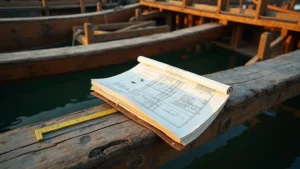
Are blueprints used in phinisi construction?
Traditionally, no. The entire design is held in the memory of the punggawa and passed down through generations. However, modern luxury builds, such as those undertaken by Phinisi Shipyard, integrate detailed 3D architectural plans and engineering specifications with the master builder’s intuitive knowledge to achieve the highest standards of safety and comfort.
What is the average cost of building a phinisi?
The cost varies dramatically with size, complexity, and level of finish. A simple 25-meter cargo phinisi might be built for under $200,000 USD. In contrast, a 50-meter, five-star luxury charter vessel with bespoke interiors, state-of-the-art systems, and premium materials can easily exceed $3 million.
Why are the Konjo people so central to this process?
The Konjo, an ethnic sub-group of the Bugis people from South Sulawesi, are the sole inheritors of this specific boat-building knowledge. As documented by historians, their mastery of the “ribs-last” technique and their deep cultural connection to the craft make them the undisputed masters of phinisi construction. Their expertise is the living heart of every authentic vessel.
From a prayer in the forest to a communal push into the turquoise sea, the traditional phinisi building timeline is far more than a construction schedule. It is a cultural saga, a story of community, and a physical manifestation of ancestral wisdom. Each swing of the adze, each wooden dowel, and each community ritual infuses the vessel with a soul that no modern factory can replicate. This blend of ancient art and modern performance is what defines the pinnacle of Indonesian yachting. To witness this process firsthand or to begin crafting your own legacy on the water, explore the bespoke commissions at Phinisi Shipyard.