Updated: August 2026
- Charter: Best for occasional voyages, exploring different regions, and avoiding maintenance responsibilities.
- Ownership: Suited for frequent sailors (4-6+ weeks/year), those desiring a bespoke vessel, and investors seeking a charter business.
- Financials: Ownership becomes financially viable when annual charter costs approach the 10-15% annual operating expense of a purchased yacht.
The warm, teak deck is solid beneath your feet. A gentle breeze, carrying the scent of cloves and distant volcanic earth, snaps the canvas overhead. On the horizon, the jagged, emerald peaks of the Banda Islands rise from a sea of impossible blue. The crew moves with a quiet, practiced efficiency, serving iced coffee as a pod of dolphins plays in the bow wave. This vessel, this floating sanctuary, feels like it was made for you. And this brings us to the ultimate question for any serious maritime enthusiast in these waters: Is it better to borrow this dream for a week, or to build it for a lifetime? The debate over a phinisi yacht charter vs ownership is not merely financial; it’s a conversation about the very nature of freedom and legacy in the world’s most extraordinary archipelago.
The Allure of the Charter: Freedom Without the Mooring Lines
For many, the charter experience represents the pinnacle of hassle-free luxury. It is the purest form of escapism, where the only decisions required are whether to dive with the manta rays before or after lunch. The primary advantage is, of course, flexibility. One season, you might task your captain to navigate the mythic waterways of Raja Ampat, an area comprising over 1,500 jungle-clad islands spread across 40,000 square kilometers. The next, you could be tracing the ancient spice routes to the Banda Islands or exploring the whale shark aggregation sites in Cenderawasih Bay. Chartering frees you from the geographical commitment of a home port. As a seasoned travel editor, I’ve spoken with dozens of high-net-worth individuals who prefer this model. A Zurich-based financier I interviewed last year put it succinctly: “I want the experience, not the asset. I charter for three weeks every year, on three different boats, in three different parts of Indonesia. My only responsibility is to pack my bag.” This approach allows you to sample the very best of the fleet, experiencing different layouts, crews, and onboard amenities with each voyage. The financial barrier to entry is also dramatically lower. A top-tier, week-long charter on a luxury phinisi for 10-12 guests can range from $40,000 to over $100,000, an all-inclusive price that covers crew, fuel, and gourmet provisions. While a significant sum, it pales in comparison to the multi-million dollar acquisition cost of a comparable vessel.
The Financial Equation: Deconstructing the True Cost of Ownership
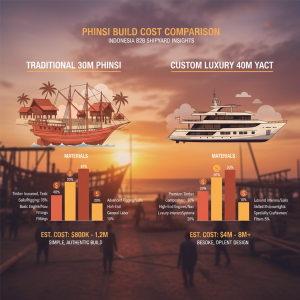
Venturing into ownership transforms the conversation from a simple vacation expense to a significant capital investment. The sticker price is just the beginning of the financial narrative. A bespoke, 40-meter luxury vessel from a world-class phinisi shipyard in Sulawesi can command a price from $2 million to upwards of $6 million, contingent on the complexity of the design, the quality of the ironwood and teak, and the sophistication of the onboard systems. Once the vessel is launched, the operational costs begin. A widely accepted industry metric is that annual running costs will amount to approximately 10% of the yacht’s initial value. For a $3 million phinisi, that translates to $300,000 per year. This figure covers a broad spectrum of necessities: salaries for a professional crew of 12-15 (a captain’s salary alone can exceed $70,000 annually), insurance premiums that can be 1.5% of the hull’s insured value, routine maintenance, and inevitable repairs. Add to that costs for mooring, fuel, and provisions. However, the most astute owners don’t view this as a simple expense. They see it as the operational cost of a high-yield business. By placing their phinisi into a reputable charter management program, owners can offset a substantial portion—often between 70% and 100%—of these annual costs. A well-marketed phinisi in Indonesia can be booked for 20 to 25 weeks a year, and in some cases more, generating significant revenue that turns a passion asset into a performing one.
The Owner’s Prerogative: Unparalleled Customization and Control
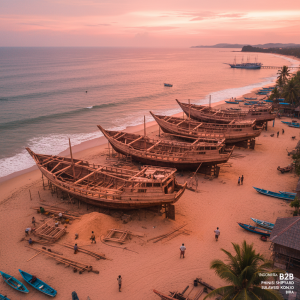
While the financial arguments are compelling, the true heart of the ownership debate lies in something far less tangible: control. A charter is an experience curated by someone else; an owned phinisi is a world of your own creation. This is where the artistry of a master builder becomes paramount. When you commission a vessel, you are not merely buying a boat; you are orchestrating a vision. I recall walking the grounds of a phinisi shipyard in South Sulawesi, watching artisans shape timbers of Ulin (ironwood) that had been curing for years. The prospective owner was there, not just observing, but collaborating—dictating the exact angle of the chaise lounges on the sundeck, specifying a climate-controlled wine cellar for his specific collection, and designing a state-of-the-art dive center with a dedicated camera room. This level of personalization is impossible in the charter market. Ownership also grants the luxury of spontaneity. The desire to escape the city for a long weekend in the Komodo National Park doesn’t require weeks of planning and booking; it requires a single call to your captain. Furthermore, you cultivate a lasting relationship with your crew. They learn your preferences intimately, from the precise strength of your morning coffee to the fact that you prefer to anchor in secluded bays away from other vessels. This vessel becomes more than property; it becomes a legacy, a floating family compound steeped in the UNESCO-recognized boatbuilding heritage of the Konjo people.
Navigating the Indonesian Archipelago: A Logistical Comparison
Indonesia is the world’s largest archipelagic state, with 17,504 islands stretching over 5,120 kilometers of ocean. Navigating this vast and complex territory presents different challenges and opportunities for charterers and owners. For the charter guest, the logistics are blissfully simple. The charter company and the yacht’s captain are masters of the domain. They manage all the cruising permits, port clearances, and local negotiations. They possess the intricate knowledge of seasonal weather patterns, hidden anchorages, and the best channels for navigating treacherous currents, such as those in the Linta Strait. Their expertise ensures your journey is seamless, safe, and optimized for the best possible experience, whether it’s timing your arrival at Padar Island for the perfect sunrise or knowing the exact tidal conditions for drift snorkeling over pristine reefs. For the owner, the logistical landscape is more involved, but it is far from insurmountable with the right team. A professional yacht management company is essential. They act as the owner’s shore-side support, handling everything from crew recruitment and payroll to financial accounting and ensuring compliance with Indonesia’s occasionally complex maritime regulations (the Cabotage Principle being a key one). This support structure frees the owner to enjoy their vessel, while the operational minutiae are handled by experts. The owner’s advantage is the ability to undertake more ambitious, long-range expeditions that are often impractical within the confines of a standard one- or two-week charter itinerary, such as a multi-month voyage from the Andaman Sea all the way to the western coast of New Guinea, a journey that truly embraces the immense scale of the region promoted by Indonesia’s tourism authorities.
The Tipping Point: When Does Ownership Make Sense?
So, where is the inflection point in the phinisi yacht charter vs ownership dilemma? The decision crystallizes around three key factors: usage, personalization, and commercial ambition. The first is a simple matter of time. Most industry experts, myself included, subscribe to the “Four-to-Six Week Rule.” If your annual time on the water is a month or less, chartering is almost always the more financially prudent choice. The cost of chartering for four weeks, while substantial, will be less than the annual operating cost of an owned yacht. However, if you envision spending six, eight, or more weeks aboard each year, the financial calculus begins to shift. At that point, your charter fees could equal or exceed the vessel’s running costs, making ownership a logical step. The second factor is the desire for a bespoke environment. If you are content with the high standards of the existing luxury charter fleet, then chartering is perfect. If, however, you have a specific vision—a library at sea, an art gallery in the main salon, a particular hull color—then ownership is the only path. This is for the individual who doesn’t just want to rent a five-star villa, but wants to design it from the ground up. The final factor is commercial intent. If you see a phinisi not just as a pleasure craft but as a charter business, the decision is made. Ownership allows you to capitalize on the robust demand for luxury charters in Indonesia, creating an asset that can generate impressive returns while still providing a personal platform for unparalleled adventure.
Quick FAQ: Your Phinisi Questions Answered
How long does it take to build a custom phinisi?
The construction timeline for a bespoke phinisi yacht typically ranges from 18 to 24 months. The exact duration depends on the vessel’s size, the intricacy of the interior design, and the technical specifications. A master builder like the artisans at Phinisi Shipyard will work with you to establish a detailed project plan from keel-laying to launch.
What is the difference between a phinisi and a standard motor yacht?
A phinisi is a traditional Indonesian two-masted sailing vessel, a design with deep historical roots in South Sulawesi, as detailed on its Wikipedia entry. While modern phinisis are equipped with powerful engines for reliability, their iconic gaff-rigged sail plan, hand-crafted wooden hull, and incredible stability provide a more authentic and romantic cruising experience compared to a typical fiberglass motor yacht. They offer vast deck spaces and a connection to the sea that is truly unique.
Can a non-Indonesian citizen own a yacht in Indonesia?
Yes, though it requires a specific legal framework. The most common and secure method for foreign nationals is to establish a foreign investment company, known as a PT PMA (Penanaman Modal Asing), in Indonesia. This company can then legally own the vessel, employ crew, and operate it for charter purposes, ensuring full compliance with national laws.
Ultimately, the choice between chartering and owning a phinisi is a reflection of your personal philosophy on travel, investment, and legacy. It is a decision between the ephemeral joy of a perfect, fleeting holiday and the enduring satisfaction of creating a permanent sanctuary in one of Earth’s last great paradises. Whether you are ready to book your next charter adventure or to begin the conversation about crafting your own magnificent vessel, the journey starts with surrounding yourself with unparalleled expertise. The master builders at Phinisi Shipyard represent generations of accumulated knowledge, ready to help you navigate this momentous decision and turn your maritime dreams into a tangible reality.