Updated: August 2026
An independent audit during construction is not an act of suspicion; it is how defects get found while they are still inexpensive. The value is concentrated at stages where work is about to be concealed, and the difference between an audit that works and one that irritates everyone is how findings are written and handled.
- Attend before concealment — structure, tanks, systems runs — not after.
- Findings should be factual, photographed, categorised by severity and given a resolution route.
- The audit should be contractual, so attendance and notice periods are agreed rather than negotiated.
What an audit actually examines
A build audit checks conformity rather than taste. Does the structure match the drawings in scantlings, spacing and material? Are fastenings as specified and correctly installed? Are joints sound and consistent? Is the hull fair? Are tanks tested before being closed? Are system runs accessible and correctly supported? Is workmanship consistent along the vessel’s length?
What it does not do is redesign the vessel or arbitrate aesthetics. Auditors who drift into design opinions lose the yard’s cooperation quickly, and cooperation is what makes the next visit useful.
When to attend
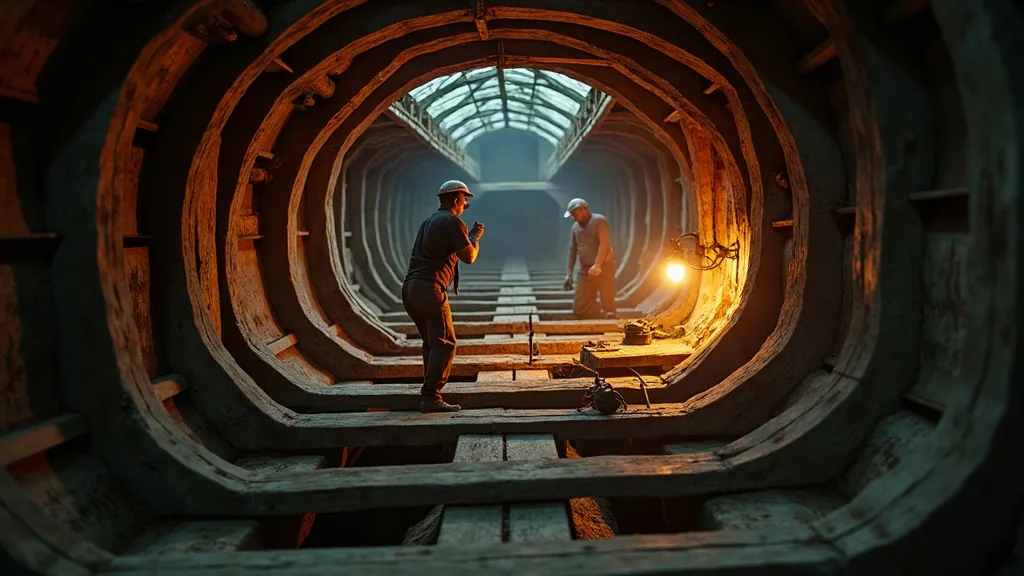
The high-value attendance points are consistent across builds. After keel and backbone assembly, while scarf joints are still visible. During planking, to assess fit and seam work. After framing, to check scantlings and fastenings against drawings. Before tanks are closed, for pressure testing. During machinery installation and alignment. Before joinery covers system runs. And at sea trials.
Each of these has the same property: what can be seen today will be invisible next month. An audit programme that clusters attendance at these points delivers far more than one that visits monthly on a calendar without regard to what is happening.
Writing findings that get fixed
A good report is short, factual and photographed. Each finding states what was observed, what the specification or drawing requires, the severity, and a proposed resolution with a date. Severity categories matter: a structural non-conformity and a cosmetic blemish should not sit in the same list with the same urgency, because that is how important items get lost.
Tone matters as much as content. Reports that read as accusations produce defensiveness; reports that read as observations produce corrections. The auditor’s job is to get the vessel built correctly, not to win an argument, and yards respond well to inspectors who acknowledge good work alongside findings.
Making the audit contractual
Audit rights belong in the build contract: the owner’s right to appoint an independent surveyor, the yard’s obligation to give notice before concealing specified work, reasonable access, and a process for resolving findings. Without these, every visit becomes a negotiation and the yard may reasonably resist.
Notice before concealment is the clause that matters most, and it costs the yard almost nothing. A short notification before tanks are closed, before joinery covers a system run, or before sheathing is applied gives the auditor a chance to attend and gives the yard protection against later accusations about work nobody inspected.
Closing the loop
An audit finding that is never closed is worse than no audit, because it creates a record of a known defect that was accepted by silence. Each finding should end in one of three states: corrected and verified, accepted as a deviation with written agreement, or escalated. Nothing should remain open indefinitely.
Keep the audit history in the owner file alongside the photographic record and the variation log. At handover it demonstrates that the vessel was built under supervision; at resale it is evidence that a buyer cannot get any other way; and if a dispute ever arises, it is the difference between a documented position and a recollection.
Sea trials: the audit that cannot be faked
Everything before sea trials is inspection of components; trials are the first assessment of the vessel as a system. A properly run trial programme checks propulsion and steering across the operating range, machinery temperatures and pressures under sustained load, vibration and noise at cruise, electrical performance with major loads running simultaneously, anchoring and windlass operation, bilge and fire pumping, and the behaviour of the hull and rig in real conditions rather than at a jetty.
Two disciplines make trials useful. First, run them long enough and hard enough that faults appear — a two-hour gentle cruise proves almost nothing. Second, record results rather than impressions: temperatures, pressures, fuel burn, speeds and any anomaly, written down at the time. That record becomes the baseline against which the vessel’s performance is judged for the rest of its life, and it is the evidence that resolves a warranty question two seasons later.
Frequently asked questions
How many audits does a typical build need?
Most builds are well served by attendance at the key concealment and testing stages rather than by a fixed monthly count. For a mid-size vessel that commonly means a handful of technical visits plus sea trials, supplemented by routine progress reporting from a site representative.
Will the yard object to independent auditing?
Good yards generally welcome it, because it removes ambiguity and settles questions with evidence. Resistance is a meaningful signal, and it is much better to discover it before signing than during the planking phase.
Who pays for the audit?
The owner normally appoints and pays the independent surveyor, which is precisely what preserves independence. The yard bears the cost of correcting non-conformities against the specification, and the contract should say so explicitly.
Related reading
Working with our build desk
If you need independent attendance at specific stages, tell us the programme and we will map the visits. You can reach the build desk on WhatsApp at +62 811-3941-4563 or by email at [email protected]. Construction and supervision contracts are issued by PT Komodo Galangan Nusantara; Phinisi Shipyard is a specialist maritime brand under Juara Holding Group.